
















Before your next attempt
Manual preparation only. This does not read or save game progress. Checks reset on reload.
A route you must read while moving
Odio el chocolate is an exploration challenge rather than another rotating temple puzzle. You move through a building, interact with objects and follow the objective of the selected mode. The useful connection for Temple of the Jackal players is spatial attention: entrances, turns and the relationship between where you are and where you intend to go.
That connection has limits. There is no claim that matching orbs, chamber rotation or the temple's progression applies here. Wantho's original game is a Baldi's Basics mod with a strange presentation and collection-driven movement. Treat it as an optional change of pace, not as a new chapter of the site's main puzzle game.
This page loads the source project's browser-hosted edition and reuses its two reference videos. The supplied screenshots come from documented source material. Neither images nor footage guarantee that the embedded release has identical rules. Begin by reading its menu and objective, then use the guide as a planning method rather than a fixed answer sheet.
Break a search into small decisions
A long route is difficult to remember when every corridor is unfamiliar. Reduce the task to the next decision: enter this room, inspect this area, or return to a known landmark. That does not create a guaranteed safe path, but it gives each movement a purpose. You can revise one decision without discarding an entire imagined plan.
Before crossing a doorway, identify the direction from which you approached. Once inside, notice one feature that distinguishes the room and one area worth inspecting. Afterward, decide whether the room is checked or unresolved. This is a general search practice, not an assertion about fixed object placements in the game.
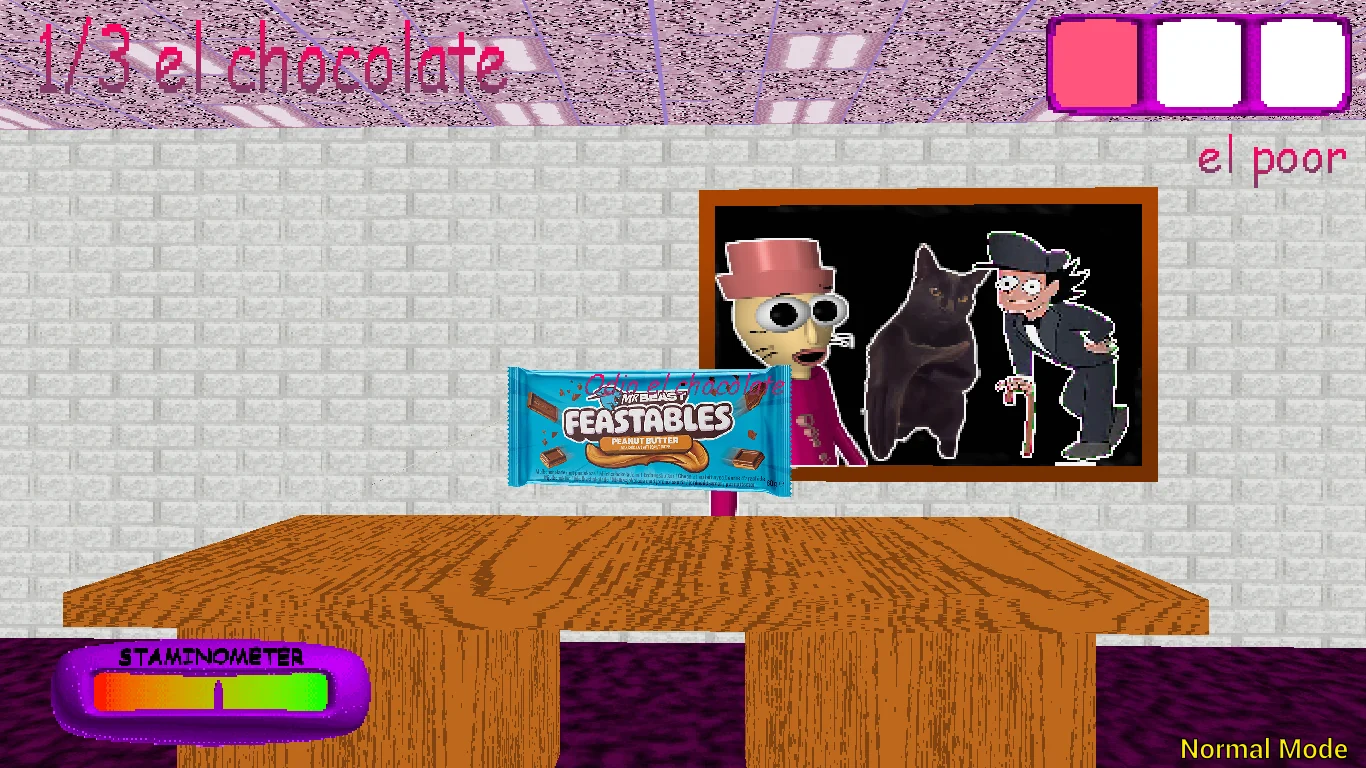
The classroom reference illustrates how several objects can compete for attention. Looking at all of them at once is less useful than choosing an inspection order. Start with orientation, then interaction, then confirmation. A screenshot cannot prove that the same layout appears in your run, so preserve the method while allowing the actual surroundings to differ.
Learn the input that changes your position
The supplied control guide lists W A S D for movement and mouse look. Click inside the frame first, then test a short movement followed by a controlled turn. Facing a doorway again after looking away is a useful first exercise. It checks orientation and focus without requiring you to solve an unknown route under pressure.
Doors and chocolate collection use left-click according to the reference. Move into a plausible position, aim, act and inspect the result. If nothing happens, adjust one factor rather than rapidly combining movement and repeated clicks. The counter or visible scene change is stronger confirmation than the fact that your finger pressed the button.
If the current build displays different instructions, use them. A browser guide is an aid to interpretation, not a reason to ignore the software in front of you. The same caution applies to phone use: a responsive page cannot create keyboard or pointer actions that the embedded game does not support. Begin with suitable input before evaluating difficulty.
A landmark is not an exit certificate
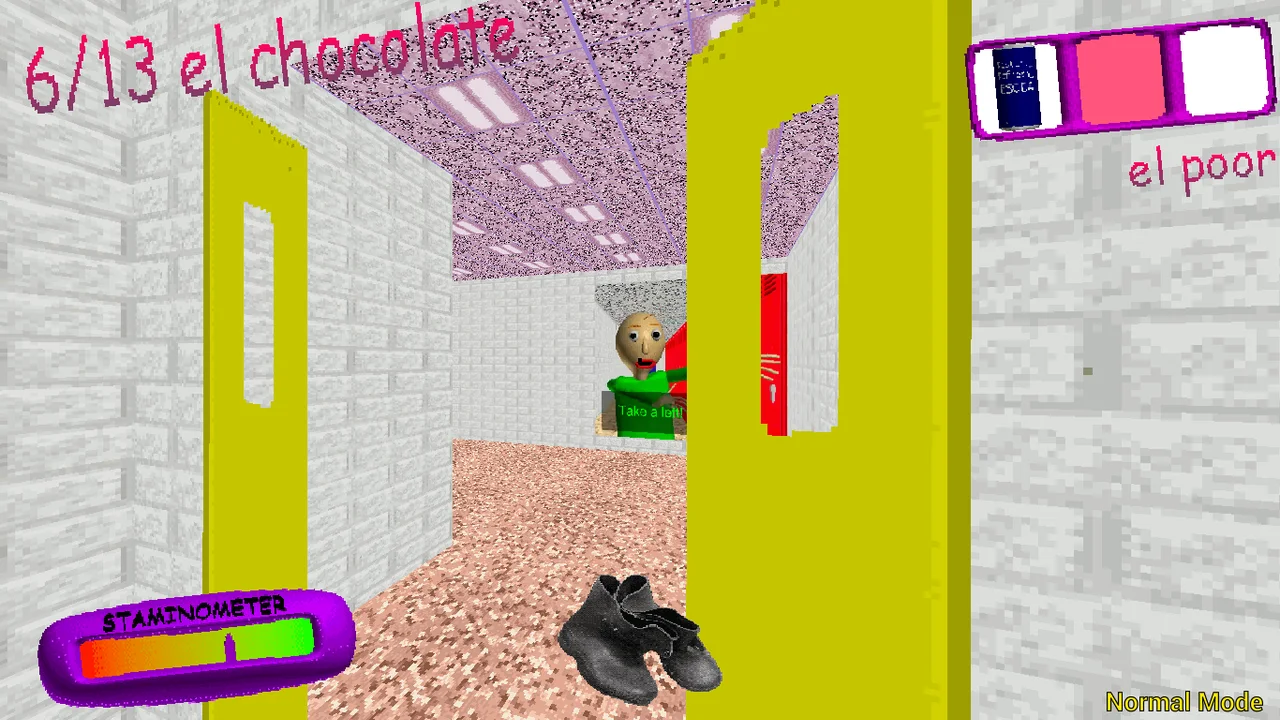
A distinct doorway is useful because it helps you remember where you have been. It is not automatically the exit, a checkpoint or a safe zone. The yellow-door screenshot is included as a visual landmark example, not as a coded instruction to always choose yellow. Function must come from the game, not from color alone.
This distinction prevents a common planning error: mistaking recognition for understanding. You might remember a door clearly while still not knowing what is behind it or whether you completed the nearby search. Pair the landmark with one factual note about your action. For example, remember that a room remains unchecked rather than merely remembering its appearance.
When the situation changes, re-evaluate the next step. A plan made during quiet exploration may not remain appropriate during pursuit or another interruption. Short plans are easier to update. The guide deliberately avoids a universal left-turn rule, room sequence or speed route because those claims would require evidence about the actual map and build.
Use visible resources, not imagined formulas
Shift is the documented sprint action. Observe stamina before committing to faster movement and choose a destination for that movement. Running into an unknown area may increase distance without improving your position. The question is whether the action leaves you with a readable next choice, not simply whether it feels more urgent than walking.
Do not infer exact recovery times or enemy speeds from a brief clip. The source material supports the presence of movement and a stamina display, not every numerical formula a guide could invent. A practical exercise is to notice when you begin sprinting and whether you knew where it would end. That observation remains useful without unsupported arithmetic.
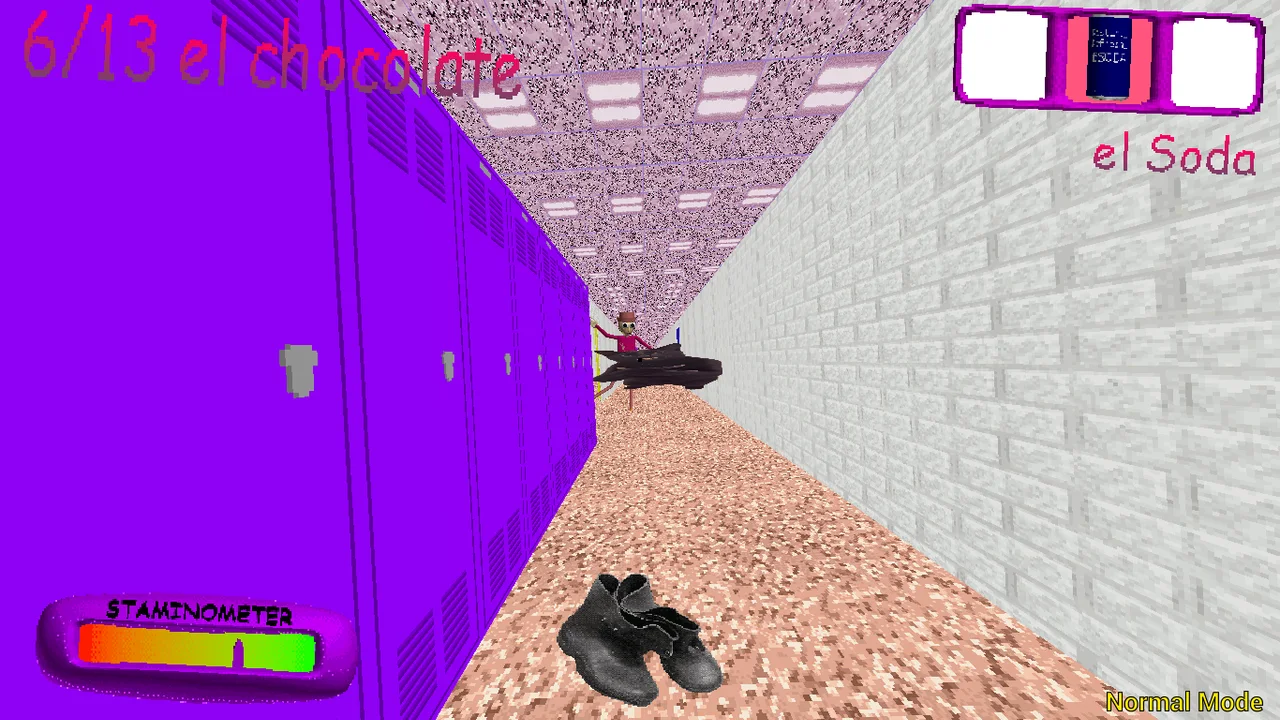
Inventory deserves its own check. Number keys one, two and three select slots; right mouse uses the selected item in the reference scheme. Look at the slot first. The inventory image does not explain every effect or prove an optimal item sequence. Read any available in-game description and compare the visible state before and after an action.
Let the objective define the finish
Main-mode material describes collecting chocolate and then reaching an exit. That means a count and a completed run are not automatically the same event. Continue reading the game's feedback after meeting a collection requirement. This page will not announce victory based on a manually checked list because it has no access to the host's actual run state.
The source identifies Main, Baltazar, Low Cortisol and Triple Trouble. Read the chosen mode's instructions rather than assuming a complete difficulty ranking from those names. Counts in screenshots may describe a stage or partial progress. In particular, a visible three should not become an invented rule that every mode ends after three pickups.
If you want to compare two choices, keep other conditions stable. Use the same input setup and focus first on what the menu or initial objective says. Record that limited observation before making a broader conclusion. Careful comparison is more useful than treating one surprising run as proof that every remembered rule is wrong.
Use the route checklist as a companion
The interactive panel below is a preparation aid. Mark the checks you personally completed: input focus, awareness of the objective, an entrance landmark, and an inspection of the display. It does not synchronize with the game. Reloading the page resets it, and no checked item should be interpreted as a saved checkpoint.
You can use it before a session or after an interruption. A short sequence helps you return attention to the right place without creating a second game to manage. It does not need to be filled perfectly on every visit. If a check is irrelevant to the current moment, leave it unchecked rather than forcing an artificial completion state.
This differs from temple progress because the tool cannot read game achievements. It should not imitate a chamber-clear signal, unlock rewards or report chocolate totals. Keeping the interface modest is more honest and more useful. Its purpose is to remind you of observable preparations, while the actual player remains responsible for showing gameplay results.
Keep the technical boundary visible
The site and embedded game are loaded from different locations. A working navigation bar does not prove that the game host responded successfully. If the frame remains blank, allow time for loading and inspect any feedback before restarting. Repeated refreshes can discard progress or repeat the same network request without improving its chances.
Fullscreen is offered as a viewing option, not a compatibility fix. If the browser refuses it, continue in the regular frame or open the supplied direct link. When keyboard input stops after reading the guide, restore focus inside the player first. That is a smaller intervention than reloading an entire run that may still be functioning.
Native Android images do not establish browser touch support, and installing the website does not download the original Android game. No offline-play promise is made for the third-party frame. These distinctions matter because a layout can look correct on a small screen while the game still requires inputs the device cannot conveniently supply.
Review the decision, not only the outcome
A useful review asks which decision became unclear. Did you inspect a room without remembering the entrance? Did you use an item before checking its slot? Did you treat a partial count as a finish condition? Pick one issue for the next visit. This turns repetition into a specific experiment rather than another attempt to be generally faster.
The videos below are optional reference footage and may reveal encounters or outcomes. Watch with a narrow question, such as how the player confirms an interaction or looks back toward a doorway. Do not assume that reproducing the route guarantees the same result in this version. Pause other audio before returning to the player.
This page expands the site's collection with a different kind of spatial challenge. It does not replace the temple puzzle, borrow its mechanics or promise the same pace. Use the illustrations and checklist to make exploration more deliberate, then return to the main game when you want a controlled chamber puzzle instead of an uncertain moving environment.
For a practical route note, pair a location with its search status. A doorway you recognize can be marked as the entrance to an unfinished room, while another can represent a checked area. These are your observations, not labels read from the game. Keeping the distinction explicit makes the note easier to revise when a later visit reveals something you missed. Do not draw conclusions about hidden paths from an image alone.
Odio el chocolate video references
Optional footage selected by the source website. Spoilers and version differences are possible.
Questions before playing
Is this a rotating-room puzzle?
No. It is an exploration and collection game. Spatial attention is the connection to Temple of the Jackal, not matching-orb mechanics.
Does the preparation list count chamber clears?
No. It is not connected to either game's progression and cannot award completion.
Is there a fixed shortest route here?
No verified shortest route is supplied. The guide teaches inspection and orientation without inventing a map.
How do I know an object was collected?
Inspect the current counter or game feedback after interaction rather than relying on a click alone.
Does collecting the target end Main?
Reference material also describes an exit objective. Wait for the game to confirm completion.
Are the four modes ranked by difficulty?
No. Their names are documented, but this page does not invent a numerical or easy-to-hard ranking.
Can fullscreen enable touch controls?
No. It only changes the view. Use inputs supported by the actual browser build.
Will the companion checklist persist?
No. It is a temporary manual aid and resets on reload.