Name the missing connection
Choose one destination and identify the relationship you need to change. Test one idea before introducing another, then reconsider the route using what actually happened.
Find your next connection
Keyboard or hosted touch arrows / Z. Device compatibility varies.Cozy puzzle / Spatial route planning
Shift the world, collect flowers, and think in connections rather than straight lines.















Temporary notes only. This does not read or save game progress.
0 / 5 planning steps reviewed
The route notebook
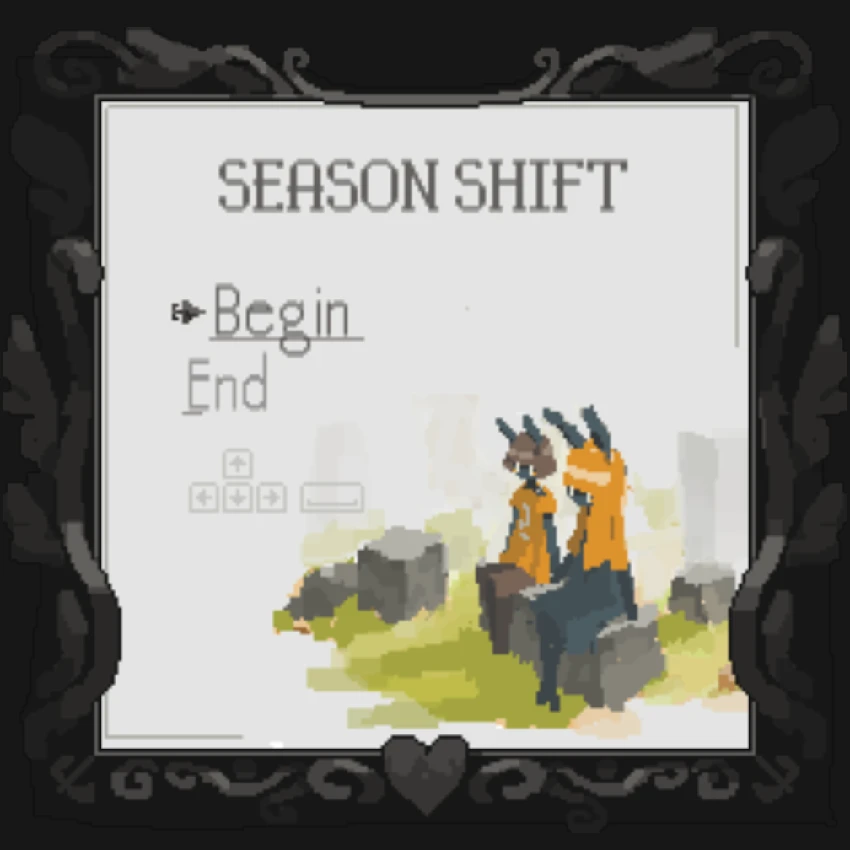
Season Shift is a cozy singleplayer pixel puzzle about changing the world to collect flowers. The official page describes approximately fifteen puzzles. This archive entry takes a spatial route planning approach: observe the arrangement, choose a destination, predict a connection, and test it. It is not an RPG or a horror game, and the rotating rooms of Temple of the Jackal are not its rules.
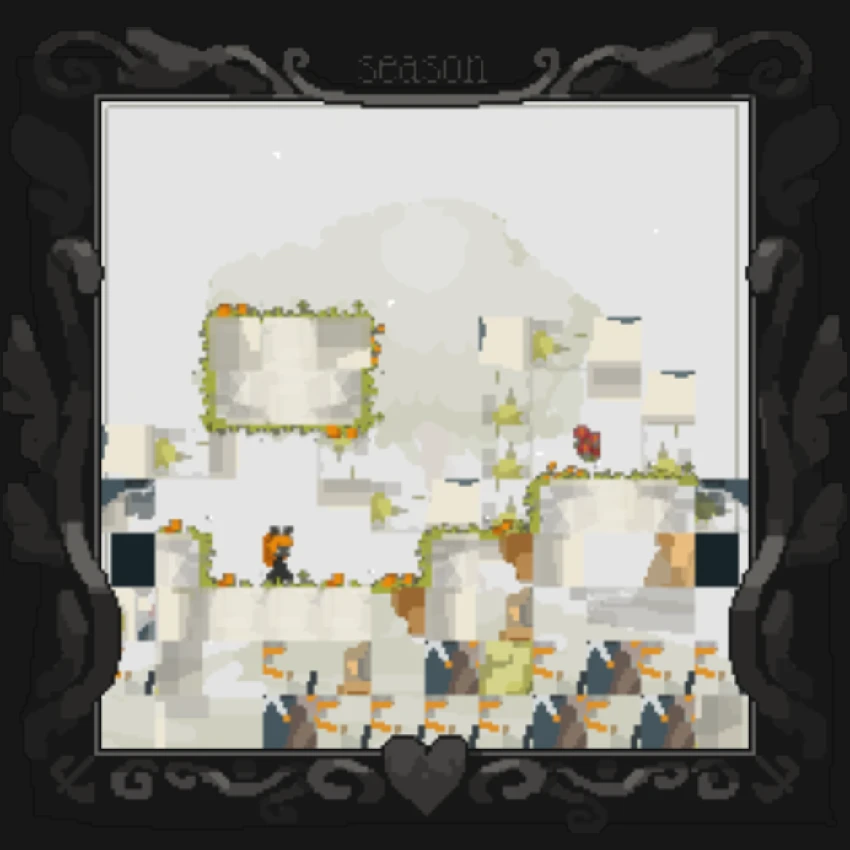
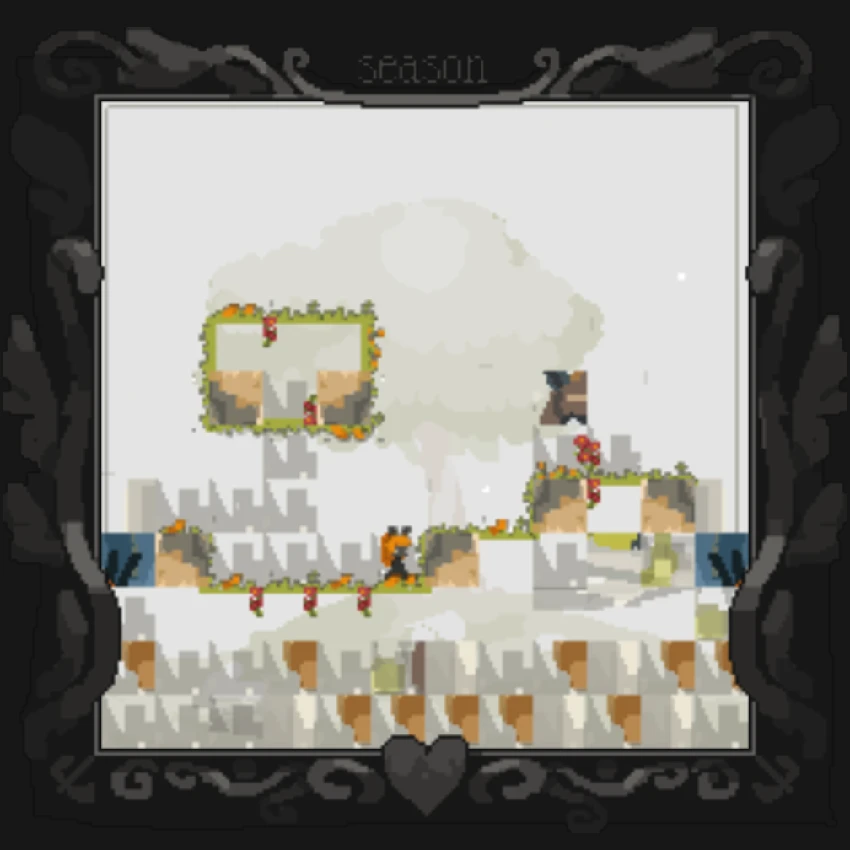
The practical advice below is an original thinking framework rather than a verified level by level solution. It deliberately avoids naming unseen objects, prescribing unsupported controls, or claiming that every puzzle has one correct route. Use the actual game instructions to establish the mechanics, then use these questions to organize what you learn. The screenshots are visual references, not annotated solution diagrams.
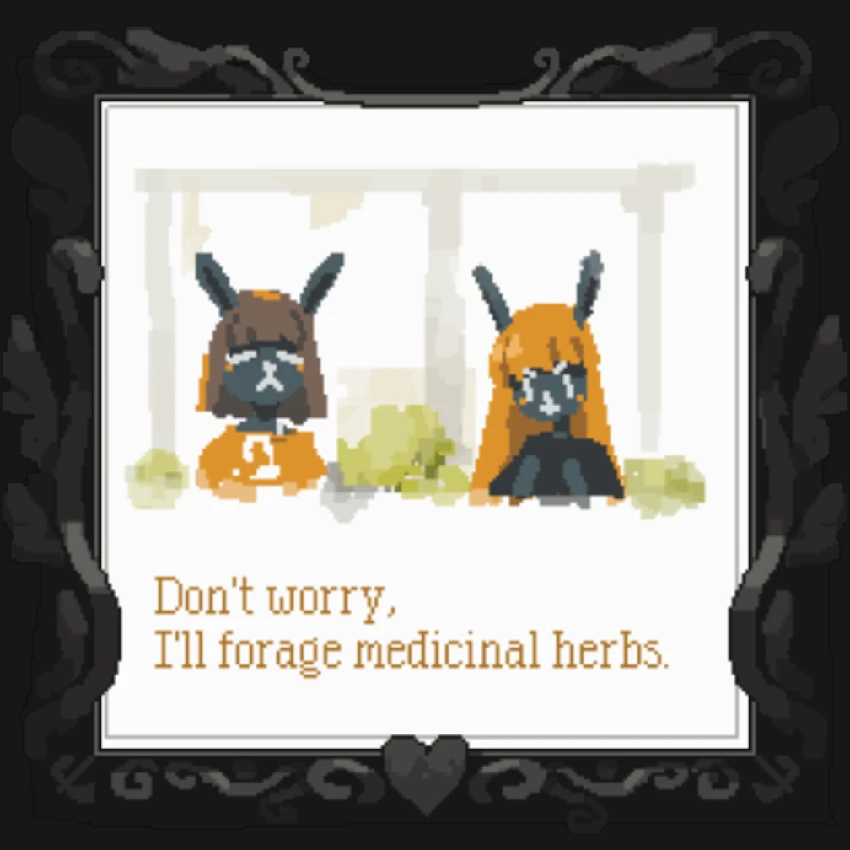
The captured browser session verified Enter and Z for starting, Right Arrow for movement, and Z for changing the world. The route reference was captured after Up and Right inputs in the same starting area. These observations establish a useful starting point, not a complete control reference or proof that every puzzle has been solved. Follow the current in-game prompts if the context changes.
Visual references
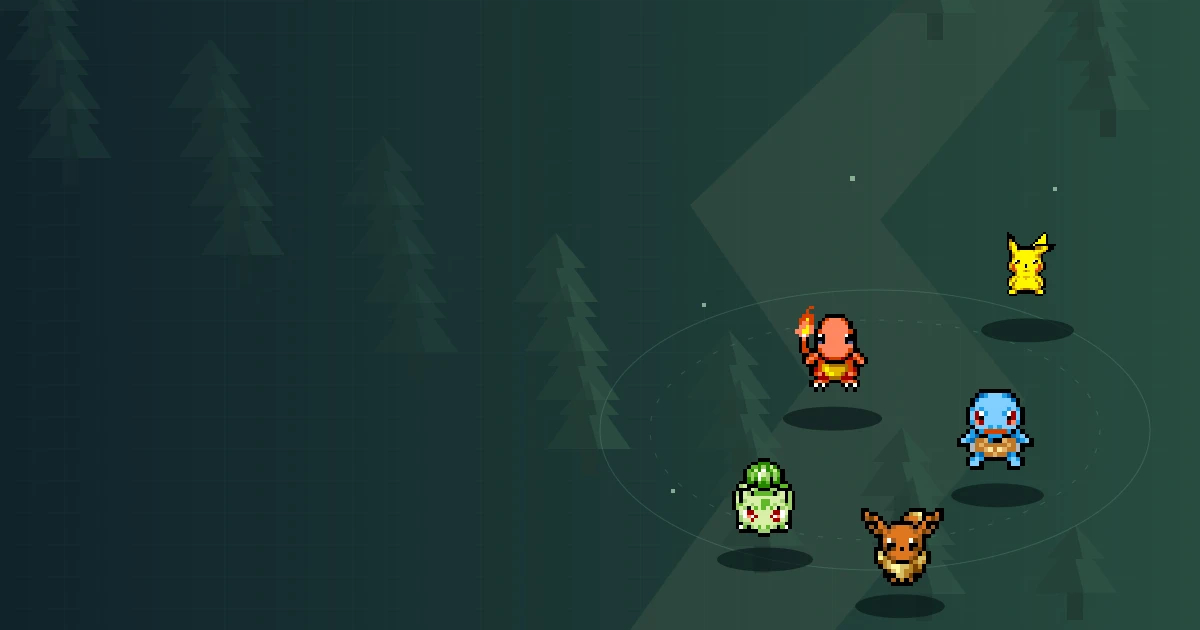
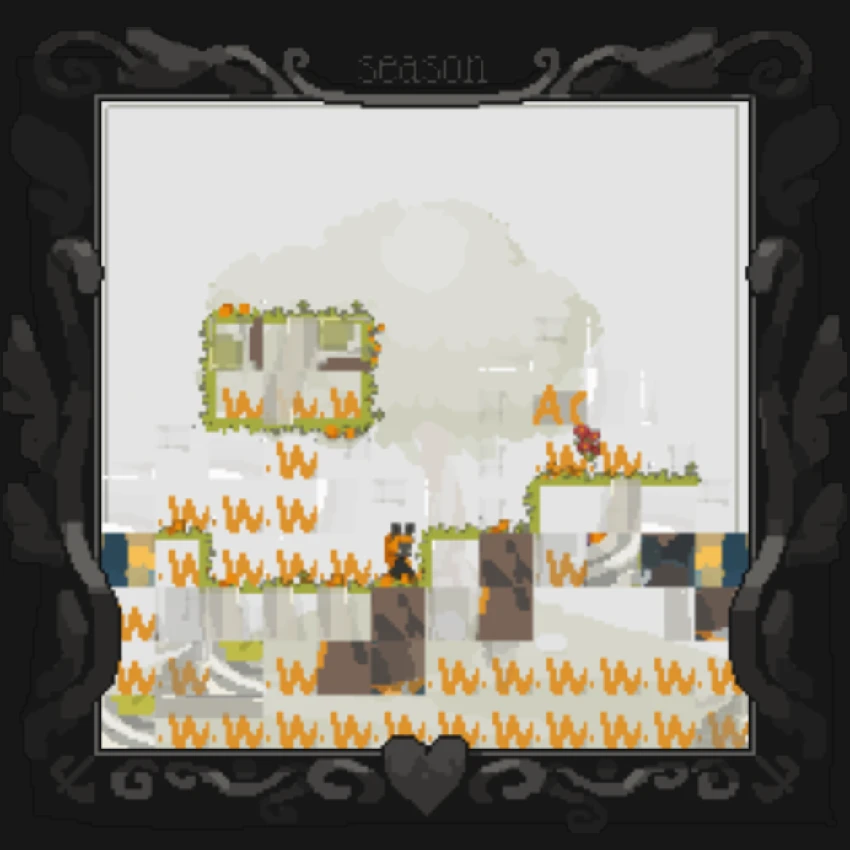
Four distinct real canvas captures: opening dialogue and three views of the same starting puzzle. These are not later stages or a complete solution.
Planning method
A compact method for turning an uncertain layout into a useful next action.
Choose one destination and identify the relationship you need to change. Test one idea before introducing another, then reconsider the route using what actually happened.
Spatial field notes
A flower can look close while remaining difficult to reach. Start by separating visual distance from usable connection. Look at the space occupied by your character, the space containing your chosen flower, and the intervening terrain. Ask which parts currently connect rather than assuming that adjacent colors form a walkable route. This is a planning habit, not a claim that every decorative boundary is an obstacle. Let the game demonstrate what you can cross, then use that observation to build a small mental map. A reliable map needs only a few landmarks; trying to memorize every pixel makes the task harder without improving your next decision.
For visitors arriving from Temple of the Jackal, the important adjustment is to leave rotating chamber assumptions behind. Season Shift is about shifting the world while collecting flowers. Do not carry over room rotation rules, Par targets, trap expectations, or a chamber solution from another game. The shared skill is spatial reasoning, not identical machinery. Treat the first puzzle as a fresh lesson in what changes and what stays connected. Your objective is to understand this board on its own terms, with the instructions visible inside the game taking priority over any familiar habits.
When several things compete for attention, choose one flower as your immediate destination. You are not promising that it must be collected first; you are giving your next experiment a clear question. Describe the approach in ordinary language, such as reaching the open area beside the destination before attempting the final crossing. Avoid inventing coordinates or assuming a fixed grid size. A simple relative description is easier to update when the world changes. If that approach is unavailable, the failed attempt has still narrowed the problem: you now know which connection needs attention rather than merely feeling that the whole puzzle is confusing.
A staging point is any position from which you can inspect or attempt the next part of your route. It need not be a special tile, checkpoint, or game feature. Before moving there, consider whether it helps you observe the destination and whether you understand your available next actions. An appealing position can be strategically unhelpful if you arrive without an idea of what comes next. Conversely, a slightly longer approach can simplify the puzzle when it leaves fewer uncertain connections to reason about. Prefer a route you can explain over a route that only looks direct.
The most useful experiment begins with a prediction. Before changing the world, say what you expect to become reachable and which landmark you expect to recognize afterward. Keep the prediction small enough to check immediately. You do not need to foresee the entire solution. If the result differs, pause and compare the before and after relationships rather than making another change at once. This turns an unexpected result into information. Repeated actions without observation can produce a new board while leaving your understanding exactly where it started, which is why slowing down can actually shorten a difficult session.
Separate observation from interpretation in your notes. An observation might be that two recognizable areas now appear connected; an interpretation is that this connection will let you reach a flower. Test the interpretation with movement before treating it as established. This distinction is especially helpful when an image contains decorative details that resemble paths. The guide does not assign undocumented powers to scenery or promise that every shift preserves your planned route. Your evidence is the current puzzle and the action you just performed. Let those two things update the plan instead of defending an earlier guess.
Reaching a flower is satisfying, but a good route also accounts for the position you will occupy afterward. Before committing to the approach, look one decision beyond it. What area would you inspect next? Which connection would you need to reach another visible objective? This is not a demand for an optimal solution or a minimum move record. It is a way to avoid concentrating so narrowly on one destination that the rest of the layout disappears from your attention. Keep the plan short: destination, approach, next observation. Long speculative sequences are fragile when the underlying rules are still becoming familiar.
If your route stops making sense, return to the last fact you actually verified. You may have assumed that a connection would remain available, confused two landmarks, or changed the world without noting the effect. Identify which assumption failed before trying a different sequence. Do not assume there is an undo button or a particular restart shortcut unless the game itself shows one. A fresh attempt can be useful, but understanding the reason for a reset is more valuable than repeating the same actions faster. The aim is a clearer model, not a larger number of attempts.
The route checklist on this page sits outside the game. Mark a step when you have actually done it for the current puzzle: identify your destination, inspect the approach, predict the effect of a shift, test the connection, and reconsider the next move. The count reflects your own preparation only. It does not read the embedded game, detect collected flowers, unlock levels, or certify that a solution is correct. This separation matters because a planning tool is most helpful when its limits are clear. You remain the observer and decision maker; the checklist simply keeps a few useful questions visible.
Clear the checklist whenever you want to plan another route. Its state lasts only while this page remains mounted, so do not use it as a saved progress record. If you leave and return, inspect the game again rather than relying on remembered ticks. You can also use it with a friend discussing the puzzle beside you, although Season Shift itself is singleplayer. One person can describe the expected result while the other checks what actually changed. Keep the discussion focused on evidence and alternatives, not on racing to supply a complete solution before the player has a chance to discover it.
A compact puzzle game does not require a rushed play style. Give each new arrangement a moment of quiet inspection before touching the controls. Pixel art can invite you to look at the whole composition at once, but route planning benefits from shifting your attention between the current position and one destination. If you feel stuck, describe the problem in a single sentence. Saying that you need a connection between two recognizable places is more actionable than saying that nothing works. Then choose the smallest experiment capable of answering that sentence. This approach preserves discovery without turning the guide into a numbered walkthrough.
Take a break when your attempts stop producing new observations. On returning, inspect the layout as if you had not already decided what its solution should be. Familiarity can make an incorrect assumption feel certain, especially after several similar attempts. A short pause often makes alternative routes easier to notice. There is no promised completion time here: approximately fifteen puzzles describes the advertised scope, not how long any individual should need. Enjoy the flowers, the visual presentation, and the process of learning how this particular world responds. Finishing quickly is not a requirement for playing thoughtfully.
Press the launch button when you are ready to load the external game. Until then, this page shows the cover rather than starting the embedded runtime. Once it opens, click inside the game and follow its own prompts. Keyboard and gamepad input are listed by the source, but this guide does not invent a key map or promise compatibility with every controller. If a key scrolls the surrounding page instead of affecting the game, check focus first. The page checklist and the game are separate interactive surfaces, so using one can move focus away from the other.
If loading stalls, allow time for the initial resources before retrying. Check your connection and any browser restrictions on embedded content. Reloading can discard unsaved activity, so use that option thoughtfully rather than as a first reaction to an unfamiliar screen. The original release was described by its author as unsupported on iPad. This hosted adaptation adds touch arrow and Z controls, but that does not guarantee compatibility with every phone or tablet. A desktop keyboard remains a useful alternative. The hosted game requires this embedded player; opening its address directly shows guidance rather than the game. Return to the player and retry the frame instead. Fullscreen can make the scene easier to inspect, but it does not add controls or solve a blocked network request.
Before you leave
The most transferable skill is learning to distinguish a useful experiment from a repeated guess. Carry that habit into other archive puzzles, while learning each game independently. A shared visual style or a similar genre label does not imply shared movement rules. This page offers a route notebook, not a replacement for the game tutorial or a guarantee of completion.
Questions · 07
Useful answers with minimal spoilers and clear browser guidance.
A cozy singleplayer pixel puzzle about shifting the world and collecting flowers, not an RPG or horror game.
The official description says approximately fifteen puzzles.
Do not transfer those rules. Learn the world shifting actions from Season Shift itself.
The original release does not support iPad according to its author. This hosted version adds touch arrows and Z, without guaranteeing every device works.
The source lists keyboard and gamepad. Follow the in-game prompts for the actual bindings.
No. It is a temporary page-local planning aid and never reads or changes game progress.
No videos were supplied for this entry, so no video section is included.