 01
01Accept an impossible contract
A routine security application quietly reveals that the theater expects its puppets to move and its employee not to question why.
THE CONTRACT ENDS WHEN THE THEATER SAYS SO
Contains horror themes, threatening puppets, and mature narrative material.Archive story · Puppet-theater horror
Accept the night-security shift, read rules that sound too specific, and enter a theater where missing puppets may be moving more confidently than their new guard.










Theater file · 01
Kingdom of Marionettes is presented by the BloodMoney2 source page as a story-first horror visual novel set around an abandoned puppet theater. The supplied opening image shows a phone displaying a night-security application: the shift runs from 11:00 p.m. to 6:00 a.m., the contract is indefinite, the worker must stay awake, follow every rule without question, monitor CCTV cameras, clean the theater, and make sure none of the puppets are missing or walking around. The language turns an ordinary job listing into a compressed warning.
The playable browser edition loads from the dedicated Kingdom of Marionettes game host supplied for this archive. The YouTube No Cookie iframe previously used by the BloodMoney2 reference page has not been discarded; it now appears in the video section beside the additional source video. Visitors receive a player-first layout, share and fullscreen controls, verified images, original English commentary, practical browser help, and a spoiler-conscious FAQ.
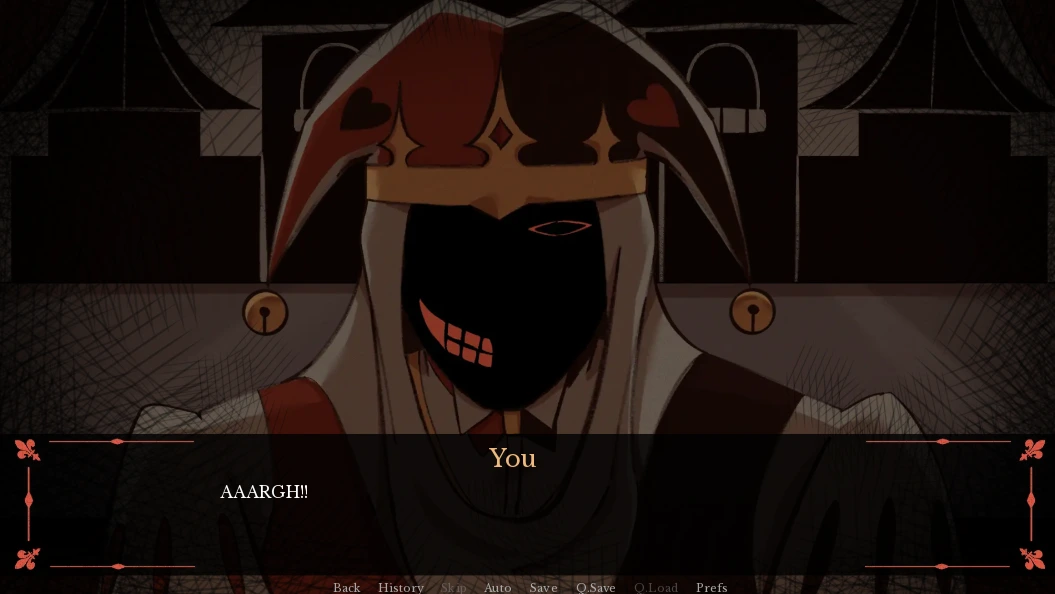
The visual identity suits the Temple site without borrowing another project’s presentation. Black theater space, red ornamental borders, parchment-colored text, a phone screen, and a masked jester sit naturally inside the archive’s dark gallery shell. The page keeps the established sandstone typography and shared game shelf, allowing the source imagery to establish its own stage rather than rebuilding BloodMoney2’s layout.
01A routine security application quietly reveals that the theater expects its puppets to move and its employee not to question why.
 02
02Every instruction implies a previous incident, turning practical duties into clues about the building’s hidden history.
 03
03CCTV, darkness, missing figures, and a long overnight shift create horror from observation rather than constant action.
 04
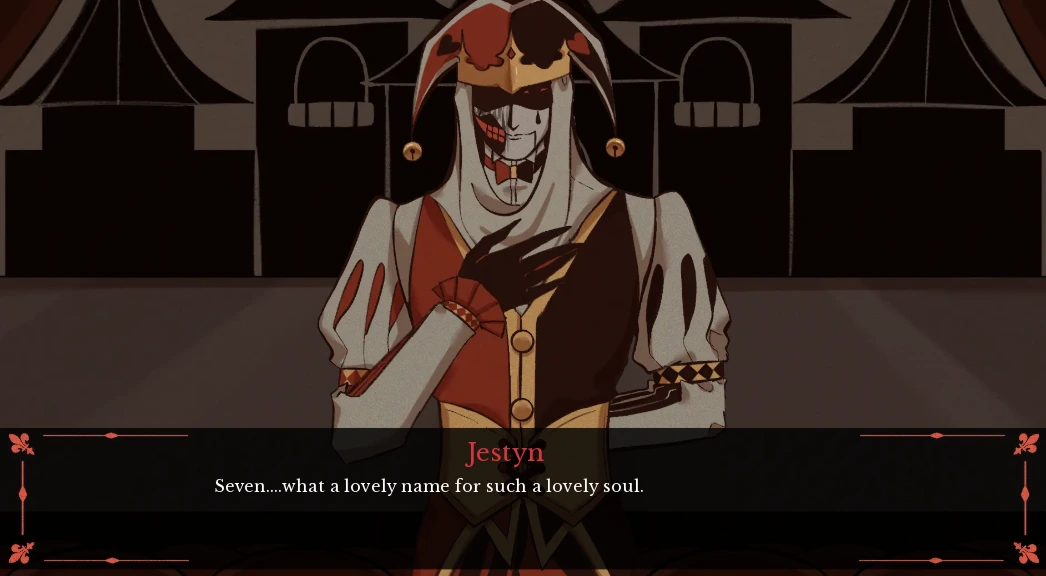
04The masked performer combines charm, theatrical control, and uncertainty, making character dynamics part of the danger.
Stage evidence · 02
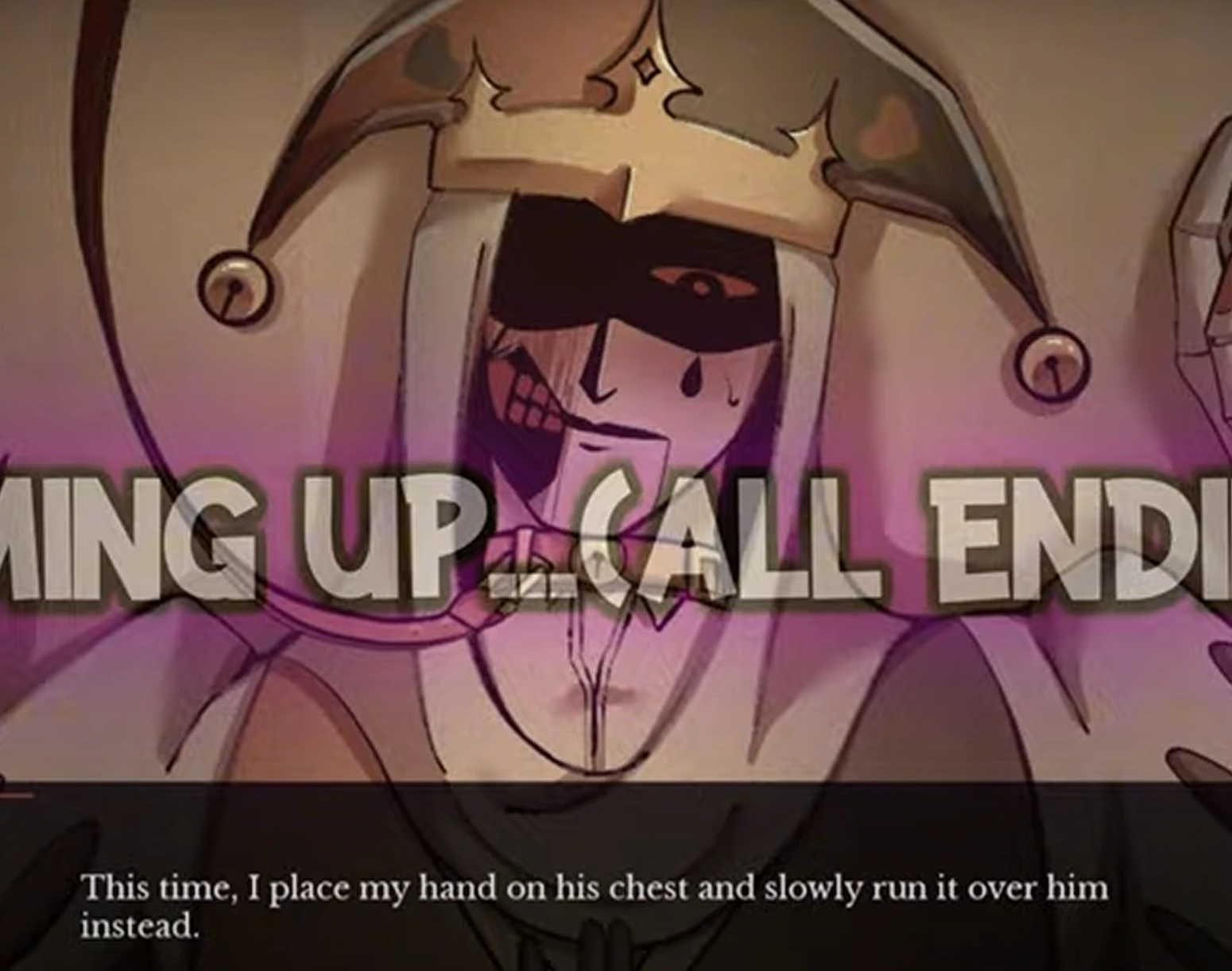
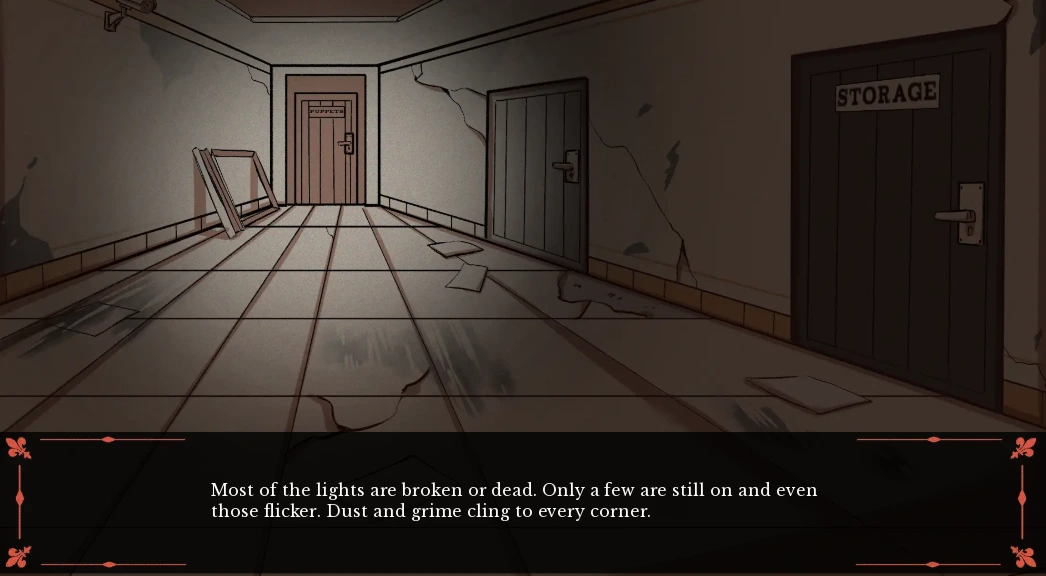
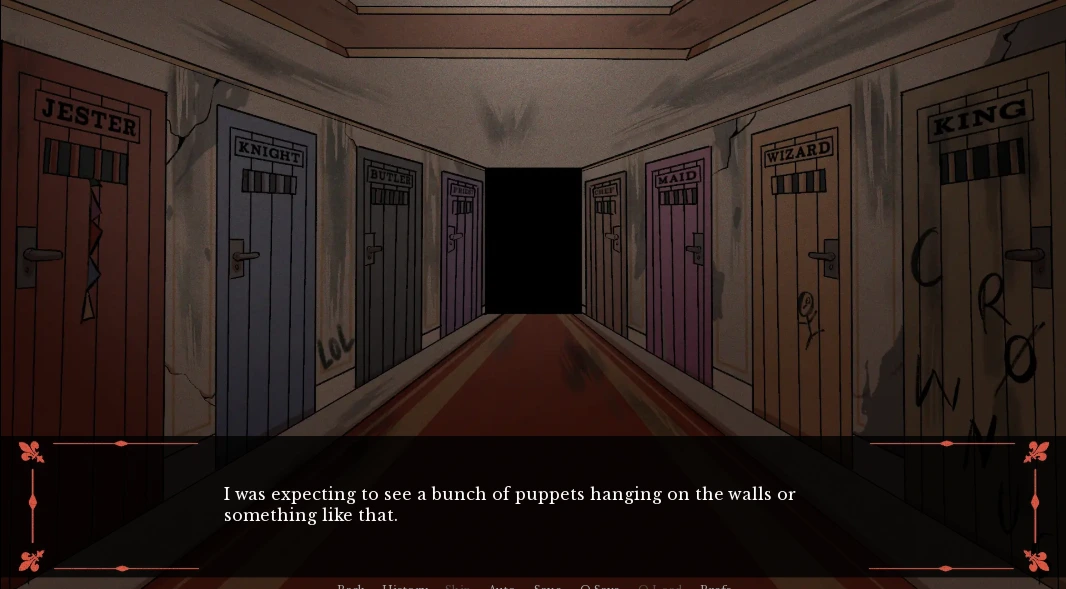
Both images come from the BloodMoney2 source project and reveal the setting without summarizing the complete narrative.
How to approach · 03
The source material emphasizes story, choices, atmosphere, and replay. Careful observation is more useful than rushing toward a supposed perfect route.
Open the archive player and read the night-security application as more than exposition. Work hours, required health, fearlessness, wakefulness, unquestioning obedience, cleaning, CCTV duty, and moving puppets establish what the theater expects. Each detail limits the protagonist’s freedom before the shift begins. Horror becomes stronger when the player remembers that these conditions were presented as ordinary employment rather than a supernatural emergency.
Visual novels communicate through portraits, backgrounds, pauses, and interface choices as much as through literal dialogue. Notice where a character is positioned, what an image withholds, and whether a line sounds rehearsed. Puppet-theater horror naturally blurs performance and sincerity. A charming statement may be part of a role, while an awkward silence may reveal more than an explicit explanation.
When the narrative offers a choice, consider what the response accepts about the theater and its inhabitants. Agreement can preserve access while surrendering a boundary; suspicion can protect the protagonist while closing off information. The source page describes choices and replay value, but it does not establish a universal correct personality. Select consistently and observe how the story answers that posture.
A return visit is most useful when it changes one assumption rather than every answer. Trust the jester earlier, resist a rule you previously accepted, or study the job listing with later context in mind. Repetition can expose foreshadowing and alternate details that were invisible during the first encounter. The goal is not merely to collect scenes, but to understand how the theater edits the meaning of its own performance.
Screening room · 04
The former reference-page iframe and the additional source video now sit together here, below the playable game.
This privacy-enhanced YouTube player was previously used as the reference page iframe and is now preserved in the proper video section.
Preview the visual-novel presentation, puppet imagery, character dynamics, and nocturnal atmosphere before entering the playable browser frame above.
Theater essay · 05
Employment paperwork usually exists to reduce uncertainty. It names a position, location, schedule, requirements, and duties so both sides can understand the arrangement. Kingdom of Marionettes uses that familiar structure to do the opposite. The application looks official enough to invite trust, but each additional line makes the theater less reasonable. The document does not discover the supernatural; it has already incorporated impossible behavior into routine management.
That bureaucratic calm is more unsettling than a frantic warning. If the listing openly screamed danger, the protagonist could reject it as an emergency. Instead, missing or walking puppets appear beside cleaning and CCTV monitoring as ordinary tasks. The institution has converted horror into policy. The new guard is not asked to investigate whether the impossible exists, only to ensure it remains orderly throughout the shift.
Specific rules are evidence. A requirement to stay awake suggests that sleep has consequences. The demand to follow instructions without question suggests that curiosity once disrupted the system. Monitoring cameras implies that direct sight is limited, while the instruction to count puppets implies that absence may be more dangerous than presence. The application gives no incident report, but its language lets the player imagine one.
This is efficient horror writing because it turns omission into participation. The audience supplies possible histories for each command, and those imagined histories can be more personal than a fixed explanation. Later scenes may confirm or complicate them, but the first tension belongs to the reader. By the time the protagonist reaches the theater, the player has already built an invisible archive of failed night shifts.
Working from eleven at night until six in the morning creates a world between public days. Visitors are gone, coworkers are absent, and normal explanations become harder to verify. A theater already depends on scheduled appearances; after closing, every movement feels like a performance happening at the wrong time. The security guard becomes both audience and unwilling stage manager.
Isolation also changes the meaning of CCTV. Cameras promise broader vision, yet they divide reality into framed images and blind spaces. Watching a monitor can confirm that something moved without explaining how it crossed the gap between views. The guard sees more of the building and feels less certain about the whole. Observation becomes necessary but never complete.
A puppet is designed to move while displaying no independent will. Its gestures belong to a hidden operator, even when the performance encourages the audience to imagine personality. Horror begins when movement continues without a visible hand. The object may have gained agency, an unseen controller may still be present, or the theater itself may have become the puppeteer.
Kingdom of Marionettes gains thematic depth from that ambiguity. A character can manipulate another person socially while puppets enact physical manipulation on stage. Rules, contracts, masks, and dialogue all become strings. The player’s choices may express freedom, but every available option still arrives through an interface authored by the story. The title asks who truly governs the kingdom and what counts as voluntary movement within it.
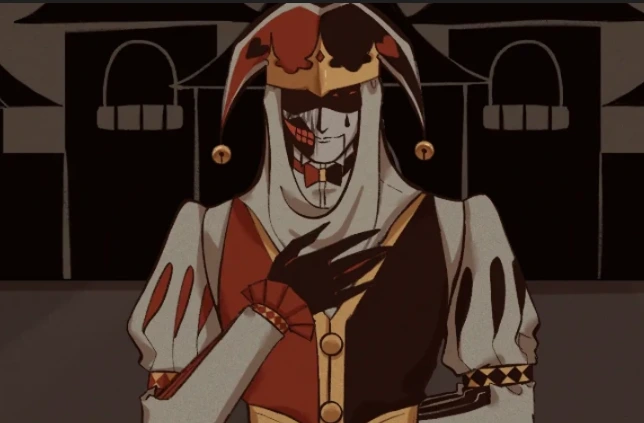
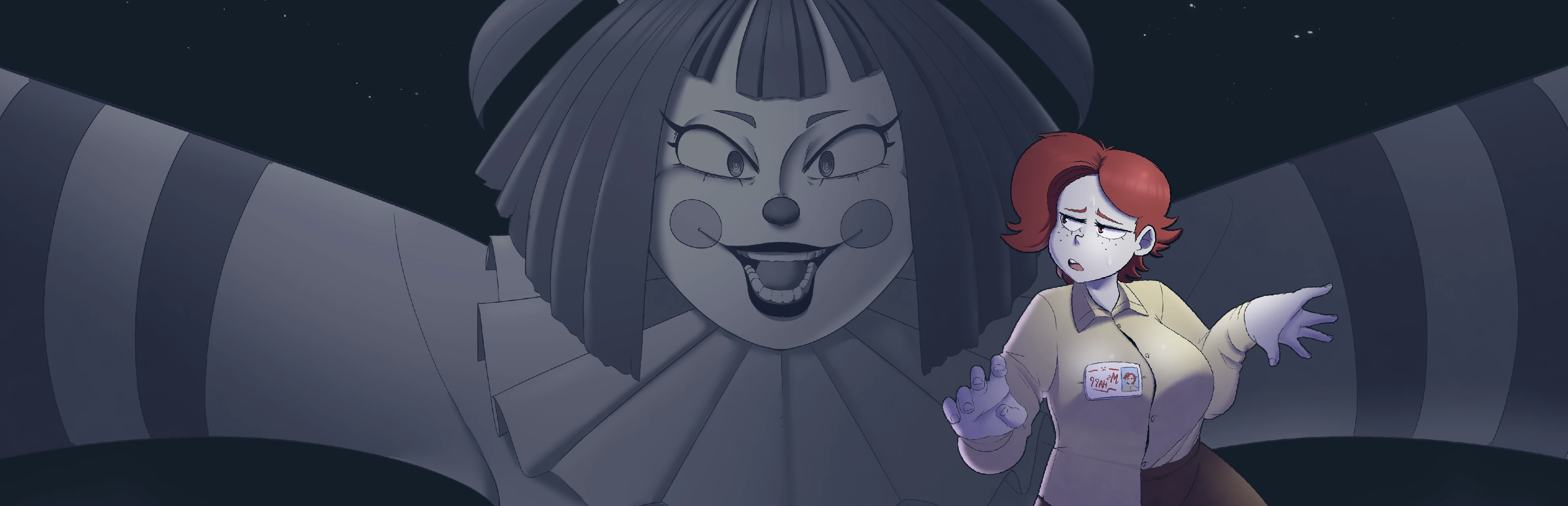
The second supplied image centers a masked jester during an intimate narrative line. The scene mixes theatrical costume, concealed eyes, a nervous drop of sweat, and physical closeness. None of those signals has one stable meaning. A mask can protect vulnerability, announce deception, or simply belong to the role. A smile can invite trust while preserving control over what the other person is allowed to see.
This tension explains why character dynamics matter to the game’s appeal. Threat does not need to eliminate charm; charm can make the threat more difficult to classify. The player may want additional access to the character precisely when caution would be safest. Horror grows from competing readings rather than a simple division between friendly portrait and monster portrait.
The source description identifies Kingdom of Marionettes as a story-first horror visual novel with choices. In that format, attention replaces reflex as the central skill. Players compare statements, remember rules, examine changes in expression, and decide what a response implies. The artwork is not a reward between gameplay systems; it is part of the system through which relationships and danger are interpreted.
This can feel quiet to players expecting combat, but quiet is productive in theater horror. A paused character portrait resembles an actor holding position under a spotlight. The text box controls timing, and the player advances the scene like a stage cue. When the normal rhythm breaks, even a small visual or verbal change can feel like an unscripted movement.
A choice menu becomes trivial when one answer is clearly correct and the others are decorative mistakes. Horror choices work better when information is incomplete. Obedience may keep the protagonist alive while strengthening the theater’s control. Defiance may preserve dignity while provoking a force the player does not understand. Affection may be sincere, strategic, or both.
The source page emphasizes replay because later context can change the meaning of an earlier response. A line chosen as kindness may look like permission on a second run. Suspicion that once felt sensible may seem unfair after another scene. Replay does not have to reveal a single official interpretation; it can show how the player’s assumptions edited the first experience.
The dedicated browser build changes the visitor from a spectator into an active reader. Instead of only watching another person advance dialogue, the player controls the pace, decides when to pause on an image, and responds when the story offers a choice. That control matters in slow horror because hesitation becomes part of the experience rather than an interval edited out of a video.
The two source videos remain useful as previews and references, but they now occupy the screening room rather than the primary player. Keeping play and video separate gives each format an honest purpose. The iframe provides direct interaction, while the footage helps visitors compare presentation, revisit a difficult moment, or decide whether the game’s theater setting suits their taste.
Playback notes · 06
The primary frame loads the playable edition from static.kingdomofmarionettes.org. Confirm the mature notice, enter the theater, and allow the external host time to transfer its story assets. A dark frame during the first moments does not necessarily mean failure. Click inside once, wait, then refresh only if the player remains unchanged after a reasonable interval.
The video section uses both youtube-nocookie.com and the standard YouTube embed domain. Privacy extensions, restricted school or workplace networks, and some regional connections may block the game host, one video host, or all three separately. If a frame stays blank, identify the failing domain in browser developer tools, allow it through trusted privacy settings, update the browser, and test another network.
Desktop and landscape tablet provide the clearest view of subtitles, text boxes, character art, and wide theater compositions. A phone can display the page, but the video interface may cover part of the image until controls fade. Rotate before entering fullscreen. Press Escape or use the browser’s exit control to return to the guide.
Game progress belongs to the external game and browser storage; video progress and recommendations belong to YouTube. The privacy-enhanced video domain reduces some tracking before interaction, but YouTube may still process technical data after playback begins. Consult the site Privacy Policy and the providers’ own terms. This archive cannot restore saves, watch history, or regional availability.
Both videos may contain more story information than the screenshots and opening guide. Visitors who want the least spoiled experience should view only a short preview, then stop before later scenes. The written sections focus on the application, theater setting, visual-novel format, jester imagery, and general choice structure rather than asserting a complete route or ending count.
The story contains horror, coercive rules, threatening puppet imagery, and mature relationship material. The public images are non-explicit, but emotional boundaries differ. Pause or leave if the combination of masks, confinement, control, or intimacy becomes uncomfortable. The page is an independent archive entry and not an official release channel.
Questions · 07
Useful answers with minimal spoilers and clear browser guidance.
Yes. Confirm the mature-content notice and launch the dedicated browser build hosted at static.kingdomofmarionettes.org inside the player.
The source describes it as a story-first horror visual novel set around an abandoned puppet theater, with choices, secrets, atmosphere, and replay value.
The supplied image shows an application for an indefinite night-security position running from 11:00 p.m. to 6:00 a.m. at the Kingdom of Marionettes theater.
The listing mentions protecting the theater from vandals, cleaning, checking that puppets are not missing or walking around, and monitoring CCTV cameras.
Puppets normally move through another person’s control. When they appear to move without a visible operator, the player cannot tell whether the object, an unseen controller, or the theater has agency.
The source page explicitly presents choices and replay as part of the experience. This archive does not invent an exact branch or ending count that the supplied material does not verify.
Yes. The YouTube No Cookie iframe from the original reference page has moved into the screening room beside the separately supplied gameplay video.
Yes, subject to YouTube availability, but landscape orientation or desktop gives dialogue, subtitles, character art, and theater backgrounds more room.
Click the player, allow YouTube domains through privacy tools, update the browser, and test another network if regional or institutional filtering blocks embedded video.
No. Temple of the Jackal is an independent archive page. The game, characters, artwork, videos, and related intellectual property remain with their respective creators and rights holders.