 01
01Read before moving
A level's instruction is operational intelligence. Remember the exact condition before darkness and pursuit make the wording harder to apply.
THE SENTENCE CHANGES WHEN COBB LEARNS A NEW VERB
Contains dark environments, pursuit, monster imagery, and sudden horror moments.Archive game · Rule-driven survival horror
Carry coal through a lightless industrial maze while the creature called Cobb gains new permissions, forcing every familiar corridor to become a different problem.












Incident report · 01
COBB CAN MOVE is a compact browser survival-horror game built around a wonderfully direct threat: Cobb can move. That statement sounds obvious until the game begins changing what it means. The player enters a dark, brick-lined facility, carries coal toward a central furnace, and navigates with only a small pool of reliable information. Each stage introduces or emphasizes another rule involving visibility, sound, distance, or movement. Survival depends less on reflexes alone than on remembering exactly what the current version of Cobb is allowed to do.
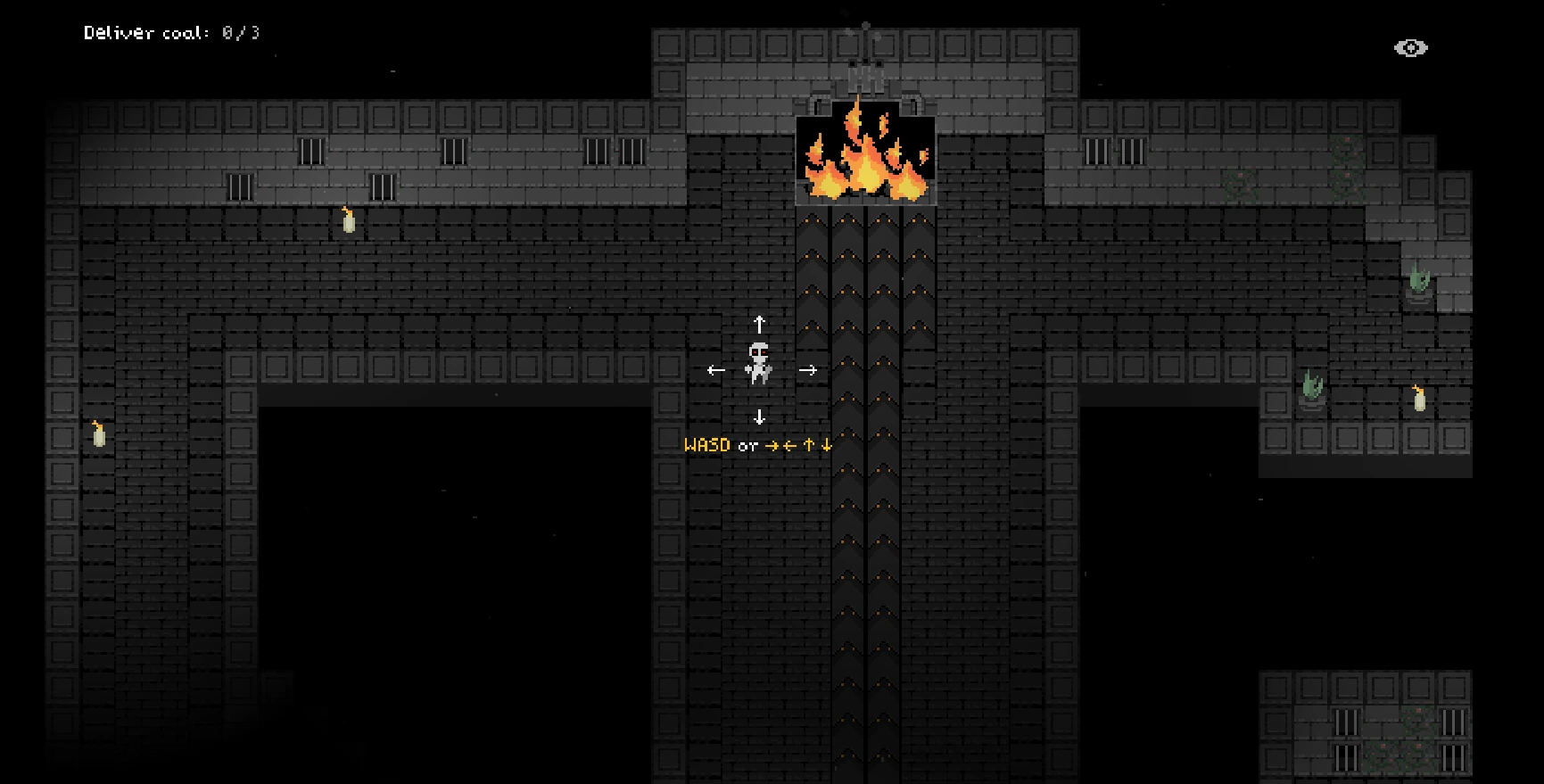
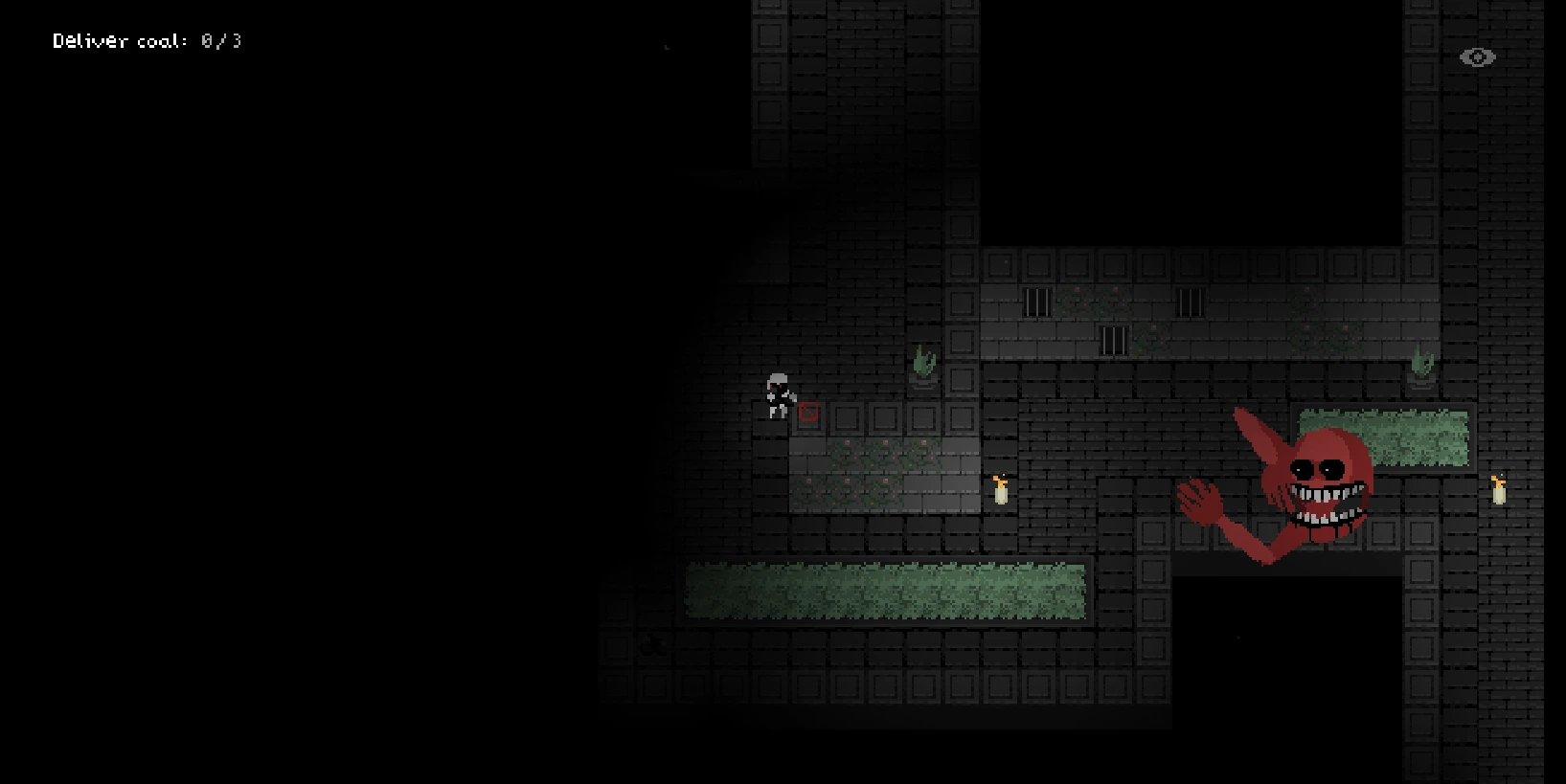
The BloodMoney2 reference page describes mistakes as readable and retries as a chance to tighten a plan. The supplied screenshots support that interpretation. One view shows the player beside the furnace with directional controls written on the floor and a delivery counter at the top. Another places the small character near a wall switch while a red, grinning Cobb reaches from the darkness. The difference between those scenes explains the loop: learn the room while it feels manageable, then execute that knowledge after the monster turns space into pressure.
This Temple of the Jackal edition keeps the existing archive presentation rather than copying the source layout. The playable build appears first, followed by the shared game shelf, verified images, an original guide, the supplied video, long-form analysis, browser help, and spoiler-light answers. The black masonry, candlelight, crude lettering, and restricted vision fit naturally inside the site's sandstone-and-ink frame without losing the game's rough independent-horror identity.
01A level's instruction is operational intelligence. Remember the exact condition before darkness and pursuit make the wording harder to apply.
 02
02Coal, furnace, switches, gaps, and safe turning points form a route that should be understood before speed becomes necessary.
 03
03The eye indicator, candles, shadows, and visibility limits turn observation into a resource rather than a passive camera function.
 04
04Failure reveals where the plan broke. Change a route, pause, or interaction instead of treating every restart as random punishment.
Facility evidence · 02
These four source images establish the cover, furnace objective, active pursuit, and available modes without inventing unsupported rooms or characters.
How to survive · 03
The controls are small; the real challenge is combining the instruction, floor plan, objective, and current location into one dependable sequence.
Do not begin a room on the strength of the title alone. Study any displayed instruction and identify the condition it describes. A monster that moves only under a particular state creates a different problem from one that responds to proximity or attention. Translate the sentence into a practical question: when is movement safe, what action changes safety, and which visual or audio cue proves that the condition has changed?
Use the earliest calm seconds to locate coal, the furnace, switches, platforms, bottlenecks, and return paths. The central objective may be obvious, but the safest approach rarely comes from walking directly toward it without checking the way back. Corners can hide Cobb, deep shadow can erase orientation, and a route that works while carrying nothing may feel different when the delivery counter becomes the only thing you are watching.
Break a long trip into short legs between landmarks. Reach a wall edge, confirm the next corridor, then continue. This reduces the amount of information you must hold during a chase and makes failure easier to diagnose. If Cobb catches you, ask which segment became unsafe and whether the cause was timing, visibility, sound, or an incorrect assumption about the rule. A precise question produces a more useful retry than simply moving faster.
Story mode is compact enough to reward controlled repetition. On the next attempt, change one part of the plan: take another side of the furnace, delay a switch, preserve more distance before turning, or stop looking at the counter until reaching safety. Endless mode can then test whether those habits remain useful when familiarity weakens. Mastery comes from recognizing relationships, not memorizing a single perfect sequence forever.
Screening room · 04
The source project provides one gameplay video that demonstrates the darkness, objectives, and pressure of a live run.
Preview the pace, visibility, coal deliveries, and pursuit before entering the hosted browser build yourself.
Survival analysis · 05
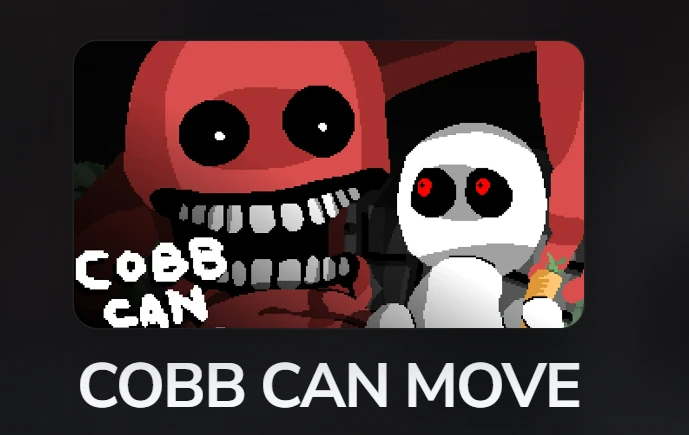
COBB CAN MOVE is unusually efficient naming. It identifies the antagonist, describes an ability, and sounds like the sort of simple sentence used to teach reading. That childlike construction clashes with the cover's huge teeth and black eyes. Before the player knows any mechanics, the title suggests that movement was once uncertain or prohibited. If Cobb can move now, the important question becomes what Cobb could not do before and what may become possible later.
Rule-based horror benefits from this grammatical clarity. Instead of hiding all danger behind unknowable behavior, the game gives the player a statement that can be tested. Fear does not disappear when a rule is understood; it becomes responsibility. The player knows that a mistake may come from forgetting, misreading, or applying the right sentence at the wrong moment. Knowledge creates agency and pressure at the same time.
The screenshots show a compact industrial environment built from repeating blocks, barred openings, candles, platforms, and a central furnace. Repetition makes the place legible enough to learn quickly. That is important because the game does not need an enormous maze when it can change the meaning of familiar space. A corridor may be a safe route under one rule and a trap under another. The architecture stays recognizable while the player's confidence is repeatedly revised.
Compactness also keeps each decision close to its consequence. Crossing a gap, touching a switch, or entering a dark passage does not disappear inside ten minutes of travel. If the plan fails, the player can usually remember the relevant choice. That readable feedback supports the retry loop described by the source page and turns short sessions into a series of increasingly informed attempts.
Darkness in many horror games acts primarily as atmosphere. Here it also limits the player's ability to maintain a reliable map. The visible circle around the character exposes only the immediate room, while candles and furnace fire become anchors. Looking is therefore a tactical action. The player must gather enough information to choose a direction without lingering until the situation changes.
The eye symbol visible in the screenshots reinforces the importance of perception. Even without assuming an undocumented mechanic, the interface asks the player to think about what can be seen and when. Horror develops in the difference between the known floor plan and the small portion currently visible. Cobb can occupy that difference, turning every unobserved route into a possibility that must be managed.
The coal counter prevents survival from becoming indefinite hiding. The player must deliver a specific amount, which means safety alone cannot complete the room. Each trip away from the furnace accepts risk in exchange for progress. This structure creates a practical rhythm: locate the objective, travel into uncertainty, recover the resource, return, and reassess the remaining requirement.
A visible count also changes the emotional weight of later trips. The first delivery teaches the route. The final delivery may tempt the player to rush because completion feels close. Good horror design often makes the player endanger themselves through understandable goals rather than arbitrary commands. The counter provides exactly that motivation and makes impatience part of the challenge.
The player character is small, pale, and visually simple. Cobb is red, wide, and dominated by a grin that contains far too many teeth. The contrast establishes vulnerability without a paragraph of lore. Cobb's face is expressive in a way that does not feel friendly; the eyes and mouth remain readable even when much of the body is swallowed by darkness.
In the pursuit screenshot, an extended arm reaches across the corridor and breaks the comfortable assumption that walls or distance provide enough protection. The gesture is almost a wave, which makes it stranger. Cobb appears aware of the player rather than functioning as an impersonal hazard. A recognizable expression gives the rule system a personality, and that personality makes every technical mistake feel like it was noticed.
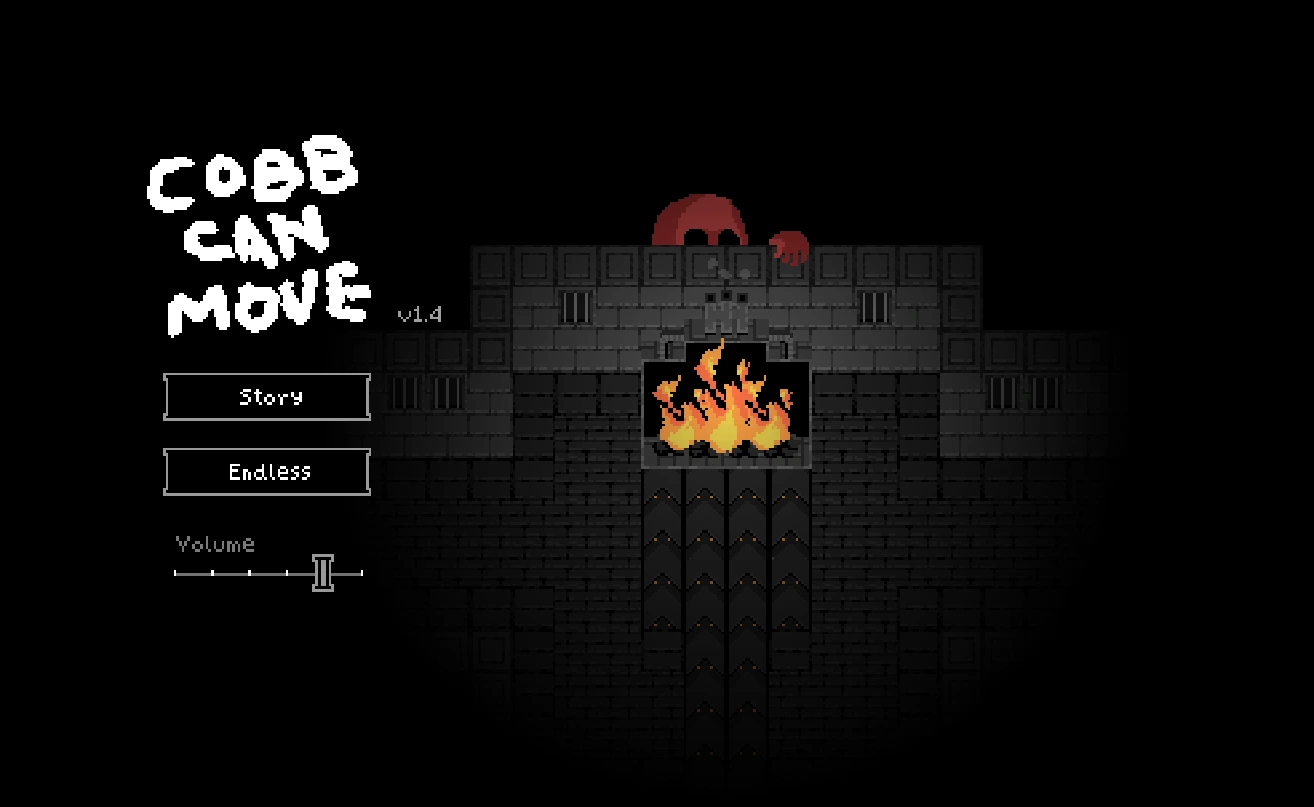
The title screen offers Story and Endless modes. Story can arrange rules and spaces into a deliberate learning curve, allowing one discovery to prepare the player for the next complication. It suits a first visit because the sequence provides context and an achievable arc. Progress is measured not only by survival but by the player's growing vocabulary for describing Cobb's behavior.
Endless mode changes the purpose of that knowledge. Instead of reaching a single authored conclusion, the player tests how long good habits remain reliable under repeated pressure. Route planning, calm observation, and rule recall become portable skills. The mode offers replay value without requiring the basic controls to become more complicated, which is ideal for a compact browser game.
Random punishment can surprise a player, but it rarely supports sustained tension. COBB CAN MOVE is more compelling when a loss produces an explanation: the route was too exposed, the instruction was forgotten, the player looked at the wrong thing, or a safe pause occurred in the wrong place. An interpretable failure invites another attempt because the player can imagine a better result.
This does not make Cobb harmless. Understanding the mistake often means admitting that the warning was visible and the player still failed to execute it. The next attempt carries memory of both the rule and the previous encounter. Anticipation grows because the player knows where pressure arrived last time, while the possibility of a different mistake prevents knowledge from becoming complete comfort.
A short independent horror game benefits from immediate access. The hosted iframe allows a visitor to read the premise, accept the mature-content notice, and begin without installing a separate package. That low barrier supports experimentation: a player can complete a few attempts, watch the video for context, or return later to test another approach.
The surrounding archive page also gives the run space to breathe. Screenshots explain the visual language before launch, while the guide and FAQ remain available after a failure. The portal does not control the external build, its saves, or its future availability, but it can make the path into the game clearer and preserve useful context around the experience.
Browser notes · 06
The game loads from s.cobb-can-move.com inside an external iframe. The archive shell can appear before the host finishes transferring the game. Allow the first load time, then click inside the frame so keyboard input goes to the game instead of the surrounding page. If the frame stays black, refresh once and check whether a privacy extension, filtered network, or DNS service is blocking the external hostname.
A desktop or laptop is recommended because the screenshots show a wide horizontal playfield. A landscape tablet may work, but a narrow phone can reduce the visible map and make the small counter or instruction text harder to read. Fullscreen removes the article from view and gives the game more room; press Escape to leave fullscreen. Browser zoom near 100 percent usually preserves the intended pixel-art scale.
Use the keyboard controls shown by the game rather than assuming a universal scheme. Click the frame first if movement does not respond. Avoid browser shortcuts that overlap with game input, and do not repeatedly press keys while the page is still loading. If focus is lost after opening a menu or sharing the page, click inside the player again.
Audio can be important to horror timing, but embedded media may begin muted because modern browsers restrict autoplay. Check the game's volume control, the tab icon, operating-system output, and connected headphones. Use a comfortable volume; sudden sounds do not need to be loud to communicate danger. Playing without audio may remove cues that help explain a failure.
Any progress or preferences belong to the external build. Return in the same browser profile and avoid clearing site storage if you expect settings to persist, but do not assume the archive can recover a save. Private browsing and cleanup utilities may remove local data. Story mode is compact enough that replay should still be treated as part of the design rather than only as recovery from a technical problem.
The game contains pursuit, darkness, unsettling faces, and sudden threat. Take breaks if repeated attempts create discomfort or visual strain. This is an independent archive page, not the official developer site, and the original code, title, video, and artwork remain with their respective owners. The page documents the supplied browser edition without claiming ownership of the game.
Questions · 07
Useful answers with minimal spoilers and clear browser guidance.
Yes. Accept the mature-content notice and launch the hosted browser build in the player. No separate download is required.
It is a compact rule-driven survival-horror game about delivering coal, navigating darkness, and adapting as Cobb's behavior changes.
The supplied screenshots show a coal-delivery counter and central furnace. Read each room's instructions, plan a route, complete the deliveries, and survive Cobb.
Yes. The supplied title image shows both Story and Endless modes.
Use the keyboard instructions displayed by the game. Click inside the iframe first so input goes to the player rather than the page.
Treat failure as evidence. Recheck the current rule, visibility, route, spacing, and the action taken immediately before Cobb moved.
It may load, but desktop or landscape tablet is recommended because the game uses a wide playfield and small pixel text.
Wait for the external host, click the frame, refresh once, and check whether content blocking or network filtering prevents s.cobb-can-move.com from loading.
No. Saves and settings, if supported, are controlled by the external game and your browser storage.
No. This is an independent browser-game archive page using the iframe, images, and video supplied by the referenced project.