 01
01Pull against the route
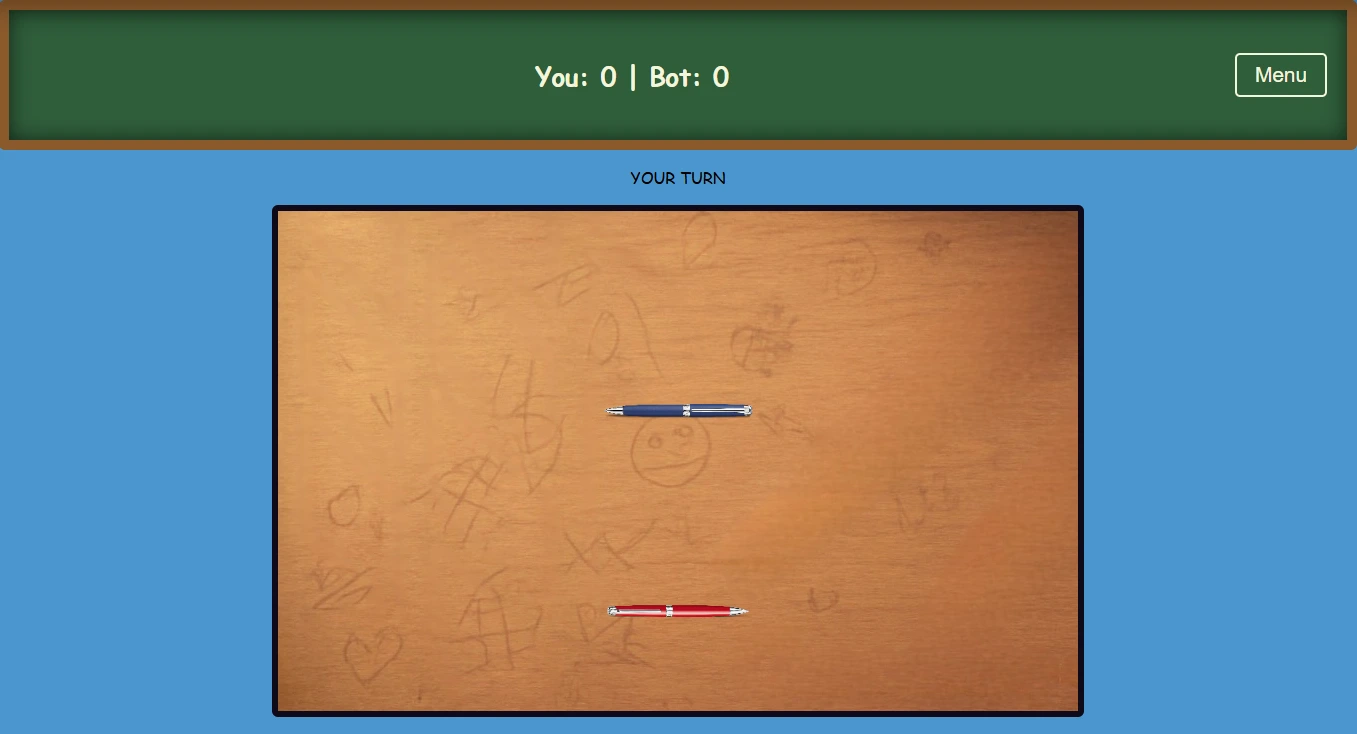
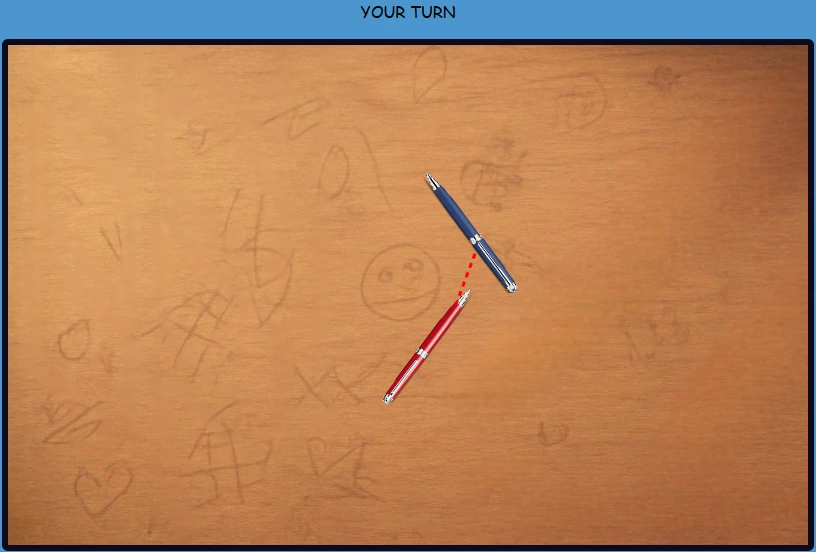
Drag backward from the intended travel line and use the guide to judge direction and stored force.
THE DESK EDGE IS THE FINAL RULE
Uses fast object motion and repeated collision effects. Sound can be reduced through the browser or device controls.Archive game / Desk physics duel
Pull the red pen opposite its intended route, release controlled force, pressure the blue opponent, and remain on the desk after the collision settles.









Desk record / 01
Pen Fight turns a schoolyard idea into a compact browser physics problem. You control the red pen by pulling backward from the route you want, then releasing stored force toward the blue computer opponent. The objective is not merely to make contact. The red pen must remain stable while the blue pen loses enough safe desk space to cross the edge.
This Temple of the Jackal edition records the duel like a recovered tabletop mechanism. The player sits above verified local artwork, two gameplay videos, launch procedure, positional analysis, browser help, an extended original essay, and nine practical FAQs. The surrounding guide does not claim an official development role; it explains the playable browser presentation and the evidence visible in each shot.
01Drag backward from the intended travel line and use the guide to judge direction and stored force.
 02
02Keep enough central space to survive recoil, overshoot, and the blue pen response.
 03
03Move the opponent toward an edge through repeatable contact rather than one uncontrolled strike.
04Wait until the pieces settle, then plan from the new geometry instead of repeating the old move.
Desk evidence / 02
The supplied images show the aiming gesture, clean desktop arena, collision lines, and the positional margin that separates pressure from self-elimination.
Launch procedure / 03
Build a repeatable physical model before attempting dramatic edge shots.
Compare each pen with the nearest boundary and identify which direction preserves a recovery lane.
Use enough power to create displacement while keeping recoil and overshoot measurable.
Score the turn by final positions, not by collision speed, sound, or visual drama.
Adjust only angle or drag distance after a miss so the next attempt produces useful evidence.
Moving records / 04
Two supplied videos show the reverse-drag launch, desktop collisions, edge pressure, and the tempo of a complete duel.
Compare pull direction, release timing, contact, and the positions left after each exchange.
Notice when controlled force creates another turn and when excess momentum threatens both pens.
Physics archive / 05
The flat arena looks familiar, but its edges behave like open gates. Every launch changes the distance, angle, and safety available to both pens. Pen Fight reduces the visible contest to a red pen, a blue opponent, and a desktop, yet each turn contains a complete physical argument. The launch begins from a fixed position, the drag establishes a direction and amount of stored force, friction slows the travel, contact transfers momentum, and the edge decides whether a small positional loss becomes elimination. The clean arena makes cause and effect easier to inspect than in a crowded action game. It also removes excuses: when a pen leaves the desk, the previous line and power were part of the reason.
Begin with a moderate pull and protect a broad margin around the red pen. A hit should be evaluated by the board it creates, not only by the sound or speed of impact. If the blue pen travels toward danger while the red pen finishes near the center, the turn purchased both pressure and flexibility. If both pens stop at the same edge, the collision may have spent too much control for too little advantage. This archive method treats position as the scarce resource and momentum as the mechanism used to exchange it.
The best replay practice changes one quantity at a time. Keep the starting line and reduce the drag distance, or preserve the power while rotating the angle slightly. Comparing two controlled attempts teaches more than replacing every variable after a miss. Over several rounds, Pen Fight becomes a record of increasingly accurate predictions: where the red pen will stop, how the blue pen will rotate, which edge becomes dangerous, and whether another turn remains possible. The duel stays playful, but improvement comes from reading evidence rather than waiting for a lucky collision.
Pulling away from the intended route stores force for motion in the opposite direction, so aim must be read before release. Pen Fight reduces the visible contest to a red pen, a blue opponent, and a desktop, yet each turn contains a complete physical argument. The launch begins from a fixed position, the drag establishes a direction and amount of stored force, friction slows the travel, contact transfers momentum, and the edge decides whether a small positional loss becomes elimination. The clean arena makes cause and effect easier to inspect than in a crowded action game. It also removes excuses: when a pen leaves the desk, the previous line and power were part of the reason.
After the blue pen moves, pause until both pieces have fully settled and rebuild the line from their new positions. A hit should be evaluated by the board it creates, not only by the sound or speed of impact. If the blue pen travels toward danger while the red pen finishes near the center, the turn purchased both pressure and flexibility. If both pens stop at the same edge, the collision may have spent too much control for too little advantage. This archive method treats position as the scarce resource and momentum as the mechanism used to exchange it.
The best replay practice changes one quantity at a time. Keep the starting line and reduce the drag distance, or preserve the power while rotating the angle slightly. Comparing two controlled attempts teaches more than replacing every variable after a miss. Over several rounds, Pen Fight becomes a record of increasingly accurate predictions: where the red pen will stop, how the blue pen will rotate, which edge becomes dangerous, and whether another turn remains possible. The duel stays playful, but improvement comes from reading evidence rather than waiting for a lucky collision.
A strong strike displaces the blue pen, but the red pen must survive its own recoil and final slide. Pen Fight reduces the visible contest to a red pen, a blue opponent, and a desktop, yet each turn contains a complete physical argument. The launch begins from a fixed position, the drag establishes a direction and amount of stored force, friction slows the travel, contact transfers momentum, and the edge decides whether a small positional loss becomes elimination. The clean arena makes cause and effect easier to inspect than in a crowded action game. It also removes excuses: when a pen leaves the desk, the previous line and power were part of the reason.
Begin with a moderate pull and protect a broad margin around the red pen. A hit should be evaluated by the board it creates, not only by the sound or speed of impact. If the blue pen travels toward danger while the red pen finishes near the center, the turn purchased both pressure and flexibility. If both pens stop at the same edge, the collision may have spent too much control for too little advantage. This archive method treats position as the scarce resource and momentum as the mechanism used to exchange it.
The best replay practice changes one quantity at a time. Keep the starting line and reduce the drag distance, or preserve the power while rotating the angle slightly. Comparing two controlled attempts teaches more than replacing every variable after a miss. Over several rounds, Pen Fight becomes a record of increasingly accurate predictions: where the red pen will stop, how the blue pen will rotate, which edge becomes dangerous, and whether another turn remains possible. The duel stays playful, but improvement comes from reading evidence rather than waiting for a lucky collision.
Central space supplies more recovery directions, while the boundary removes options and magnifies small errors. Pen Fight reduces the visible contest to a red pen, a blue opponent, and a desktop, yet each turn contains a complete physical argument. The launch begins from a fixed position, the drag establishes a direction and amount of stored force, friction slows the travel, contact transfers momentum, and the edge decides whether a small positional loss becomes elimination. The clean arena makes cause and effect easier to inspect than in a crowded action game. It also removes excuses: when a pen leaves the desk, the previous line and power were part of the reason.
After the blue pen moves, pause until both pieces have fully settled and rebuild the line from their new positions. A hit should be evaluated by the board it creates, not only by the sound or speed of impact. If the blue pen travels toward danger while the red pen finishes near the center, the turn purchased both pressure and flexibility. If both pens stop at the same edge, the collision may have spent too much control for too little advantage. This archive method treats position as the scarce resource and momentum as the mechanism used to exchange it.
The best replay practice changes one quantity at a time. Keep the starting line and reduce the drag distance, or preserve the power while rotating the angle slightly. Comparing two controlled attempts teaches more than replacing every variable after a miss. Over several rounds, Pen Fight becomes a record of increasingly accurate predictions: where the red pen will stop, how the blue pen will rotate, which edge becomes dangerous, and whether another turn remains possible. The duel stays playful, but improvement comes from reading evidence rather than waiting for a lucky collision.
The computer response creates a new chamber after every exchange, making copied shots less useful than fresh observation. Pen Fight reduces the visible contest to a red pen, a blue opponent, and a desktop, yet each turn contains a complete physical argument. The launch begins from a fixed position, the drag establishes a direction and amount of stored force, friction slows the travel, contact transfers momentum, and the edge decides whether a small positional loss becomes elimination. The clean arena makes cause and effect easier to inspect than in a crowded action game. It also removes excuses: when a pen leaves the desk, the previous line and power were part of the reason.
Begin with a moderate pull and protect a broad margin around the red pen. A hit should be evaluated by the board it creates, not only by the sound or speed of impact. If the blue pen travels toward danger while the red pen finishes near the center, the turn purchased both pressure and flexibility. If both pens stop at the same edge, the collision may have spent too much control for too little advantage. This archive method treats position as the scarce resource and momentum as the mechanism used to exchange it.
The best replay practice changes one quantity at a time. Keep the starting line and reduce the drag distance, or preserve the power while rotating the angle slightly. Comparing two controlled attempts teaches more than replacing every variable after a miss. Over several rounds, Pen Fight becomes a record of increasingly accurate predictions: where the red pen will stop, how the blue pen will rotate, which edge becomes dangerous, and whether another turn remains possible. The duel stays playful, but improvement comes from reading evidence rather than waiting for a lucky collision.
Rebounds are valuable when a broad surface creates a clearer angle, not when several collisions turn planning into hope. Pen Fight reduces the visible contest to a red pen, a blue opponent, and a desktop, yet each turn contains a complete physical argument. The launch begins from a fixed position, the drag establishes a direction and amount of stored force, friction slows the travel, contact transfers momentum, and the edge decides whether a small positional loss becomes elimination. The clean arena makes cause and effect easier to inspect than in a crowded action game. It also removes excuses: when a pen leaves the desk, the previous line and power were part of the reason.
After the blue pen moves, pause until both pieces have fully settled and rebuild the line from their new positions. A hit should be evaluated by the board it creates, not only by the sound or speed of impact. If the blue pen travels toward danger while the red pen finishes near the center, the turn purchased both pressure and flexibility. If both pens stop at the same edge, the collision may have spent too much control for too little advantage. This archive method treats position as the scarce resource and momentum as the mechanism used to exchange it.
The best replay practice changes one quantity at a time. Keep the starting line and reduce the drag distance, or preserve the power while rotating the angle slightly. Comparing two controlled attempts teaches more than replacing every variable after a miss. Over several rounds, Pen Fight becomes a record of increasingly accurate predictions: where the red pen will stop, how the blue pen will rotate, which edge becomes dangerous, and whether another turn remains possible. The duel stays playful, but improvement comes from reading evidence rather than waiting for a lucky collision.
Distance, stopping point, and collision direction reveal whether force or angle caused the result. Pen Fight reduces the visible contest to a red pen, a blue opponent, and a desktop, yet each turn contains a complete physical argument. The launch begins from a fixed position, the drag establishes a direction and amount of stored force, friction slows the travel, contact transfers momentum, and the edge decides whether a small positional loss becomes elimination. The clean arena makes cause and effect easier to inspect than in a crowded action game. It also removes excuses: when a pen leaves the desk, the previous line and power were part of the reason.
Begin with a moderate pull and protect a broad margin around the red pen. A hit should be evaluated by the board it creates, not only by the sound or speed of impact. If the blue pen travels toward danger while the red pen finishes near the center, the turn purchased both pressure and flexibility. If both pens stop at the same edge, the collision may have spent too much control for too little advantage. This archive method treats position as the scarce resource and momentum as the mechanism used to exchange it.
The best replay practice changes one quantity at a time. Keep the starting line and reduce the drag distance, or preserve the power while rotating the angle slightly. Comparing two controlled attempts teaches more than replacing every variable after a miss. Over several rounds, Pen Fight becomes a record of increasingly accurate predictions: where the red pen will stop, how the blue pen will rotate, which edge becomes dangerous, and whether another turn remains possible. The duel stays playful, but improvement comes from reading evidence rather than waiting for a lucky collision.
Pointer focus, frame rate, fullscreen, and device size influence how precisely a drag can be judged. Pen Fight reduces the visible contest to a red pen, a blue opponent, and a desktop, yet each turn contains a complete physical argument. The launch begins from a fixed position, the drag establishes a direction and amount of stored force, friction slows the travel, contact transfers momentum, and the edge decides whether a small positional loss becomes elimination. The clean arena makes cause and effect easier to inspect than in a crowded action game. It also removes excuses: when a pen leaves the desk, the previous line and power were part of the reason.
After the blue pen moves, pause until both pieces have fully settled and rebuild the line from their new positions. A hit should be evaluated by the board it creates, not only by the sound or speed of impact. If the blue pen travels toward danger while the red pen finishes near the center, the turn purchased both pressure and flexibility. If both pens stop at the same edge, the collision may have spent too much control for too little advantage. This archive method treats position as the scarce resource and momentum as the mechanism used to exchange it.
The best replay practice changes one quantity at a time. Keep the starting line and reduce the drag distance, or preserve the power while rotating the angle slightly. Comparing two controlled attempts teaches more than replacing every variable after a miss. Over several rounds, Pen Fight becomes a record of increasingly accurate predictions: where the red pen will stop, how the blue pen will rotate, which edge becomes dangerous, and whether another turn remains possible. The duel stays playful, but improvement comes from reading evidence rather than waiting for a lucky collision.
Browser procedure / 06
Launch the player, wait for the arena, and click inside the iframe before dragging the red pen. Use fullscreen when the aiming guide or desk edge is difficult to judge. A mouse or trackpad is recommended because repeatable drag distance is easier to compare than a short touch gesture on a narrow phone display.
If the frame stays blank, refresh once and inspect extensions, DNS filters, privacy controls, or networks that block scripts, WebGL, storage, or embedded pages. If input feels delayed, close heavy tabs and let the pens stop completely before the next attempt. The game is externally hosted, so network availability remains necessary after this guide has loaded.
Questions · 07
Useful answers with minimal spoilers and clear browser guidance.
Pen Fight is a browser physics duel where the player launches a red pen against a blue computer opponent on a desktop arena.
Click or press the red pen, drag opposite the desired travel direction, judge the line and force, then release.
Push the blue pen beyond the desk edge while keeping the red pen inside the playable surface.
The input behaves like a slingshot: pulling backward stores force for a launch in the opposite direction.
No. Maximum power increases recoil and overshoot. A moderate shot often creates a safer follow-up position.
This browser presentation uses a blue computer-controlled opponent and does not advertise live online matchmaking.
Touch may work in a current browser, but desktop pointer input gives more repeatable angle and power control.
Wait for external assets, click inside the frame, refresh once, and check blockers or network restrictions.
Protect central space, observe where each launch stops, and adjust only one variable between attempts.