 01
01Scan before acting
Turn through the whole room and identify exits, work surfaces, signs, unusual silhouettes, and repeated colors before committing to a single object.
THE BRIGHTEST ROOM MAY HIDE THE QUIETEST CLUE
Contains uncanny mascot imagery, tense transitions, and mild psychological unease without graphic violence.Archive game / Point-and-click mystery
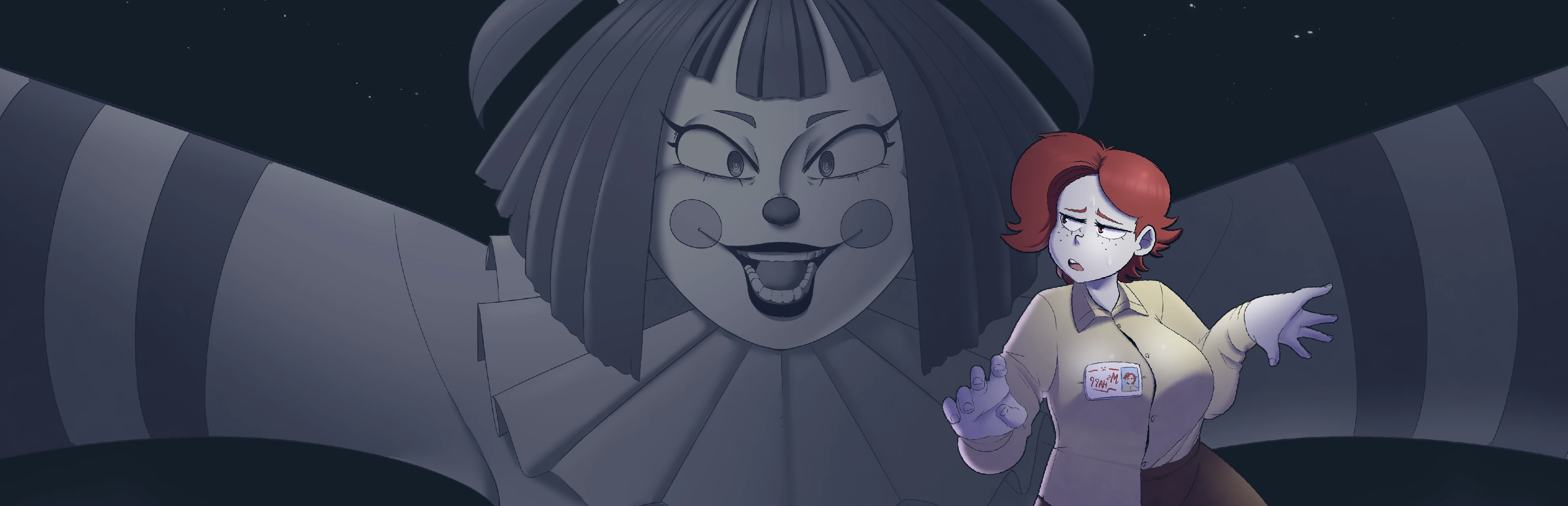
Follow Ms. Happ from an ordinary office routine into a bright attraction where every prop, label, cabinet, and cheerful face may belong to a larger puzzle.















Attraction briefing / 01
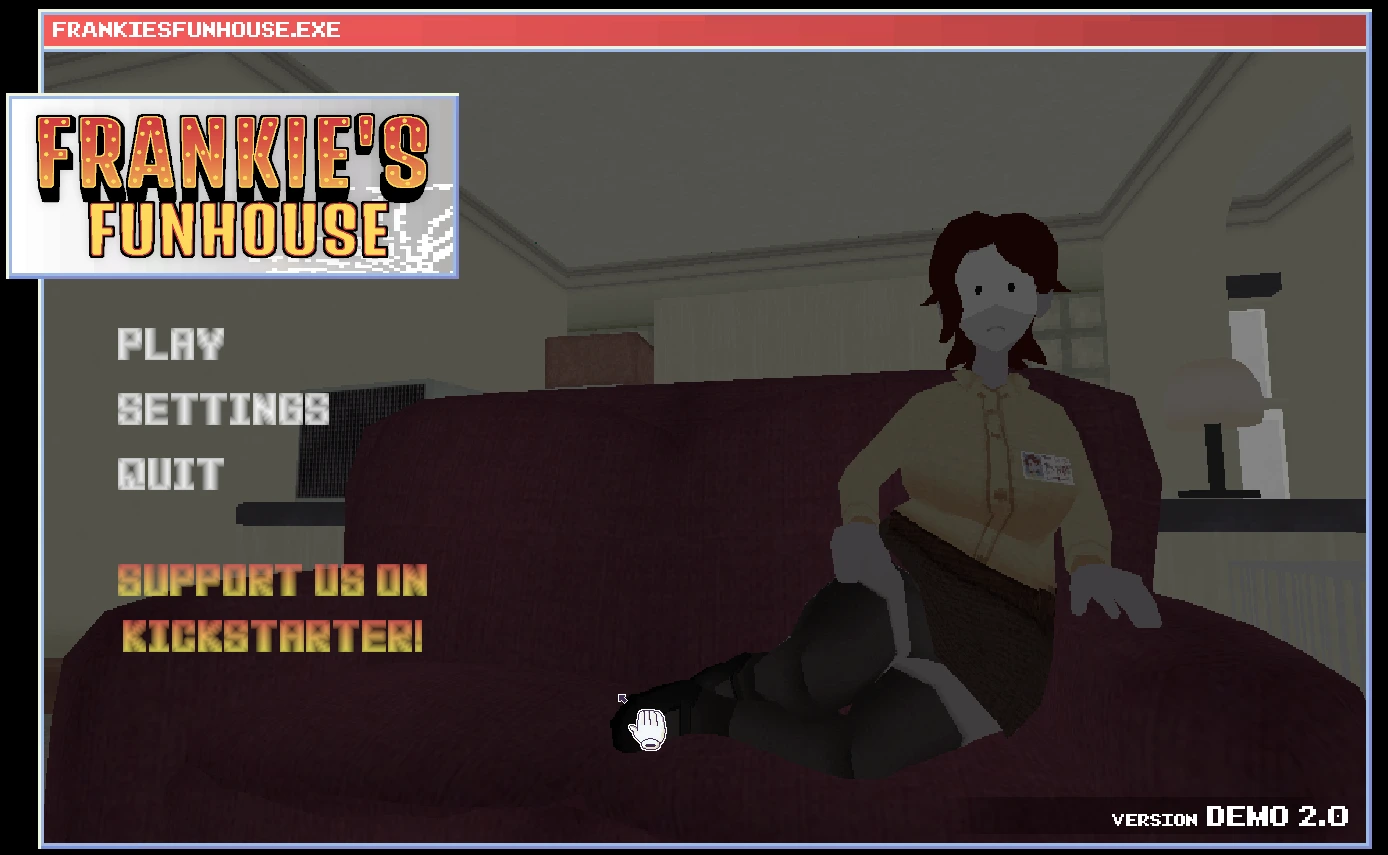
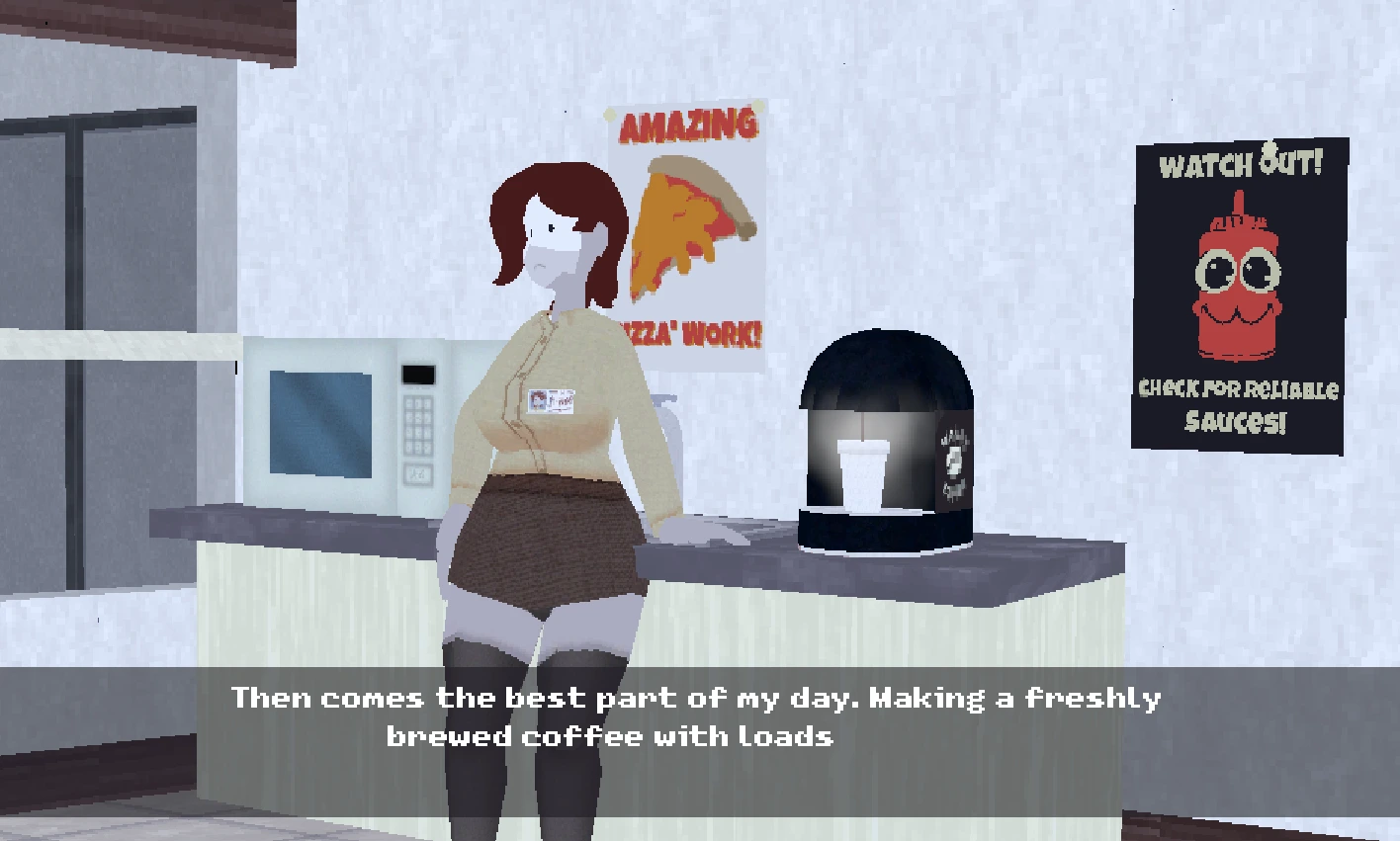
Frankie's Fun House begins with Ms. Happ in spaces that feel ordinary enough to understand: desks, coworkers, coffee, corridors, and small tasks that can be completed through direct interaction. That familiar opening is valuable because it teaches a baseline before the scenery becomes more theatrical. The player learns that labels can be read, objects can be handled, rooms can be searched, and apparently casual details can matter later. When the fun-house identity starts pressing into the routine, the same practical skills become a defense against confusion.
This Temple of the Jackal archive edition presents the game as a recovered attraction plan. The playable browser frame appears above an original guide, verified screenshots, two videos, troubleshooting notes, and a nine-question FAQ. Its purpose is not to reveal every answer. Instead, the page explains how to observe a complete room, inspect an item from several angles, organize inventory, recognize repeated visual language, and test one reasonable interaction at a time without turning discovery into a mechanical checklist.
01Turn through the whole room and identify exits, work surfaces, signs, unusual silhouettes, and repeated colors before committing to a single object.
 02
02Rotate close-up objects and read their descriptions because a back, underside, removable piece, or printed mark can carry the useful evidence.
 03
03A poster, desk item, conversation, and cabinet mechanism may describe one solution even when they appear in separate locations.
 04
04When a solution works, remember the observation that suggested it so later puzzles can reuse the same visual grammar.
Recovered rooms / 02
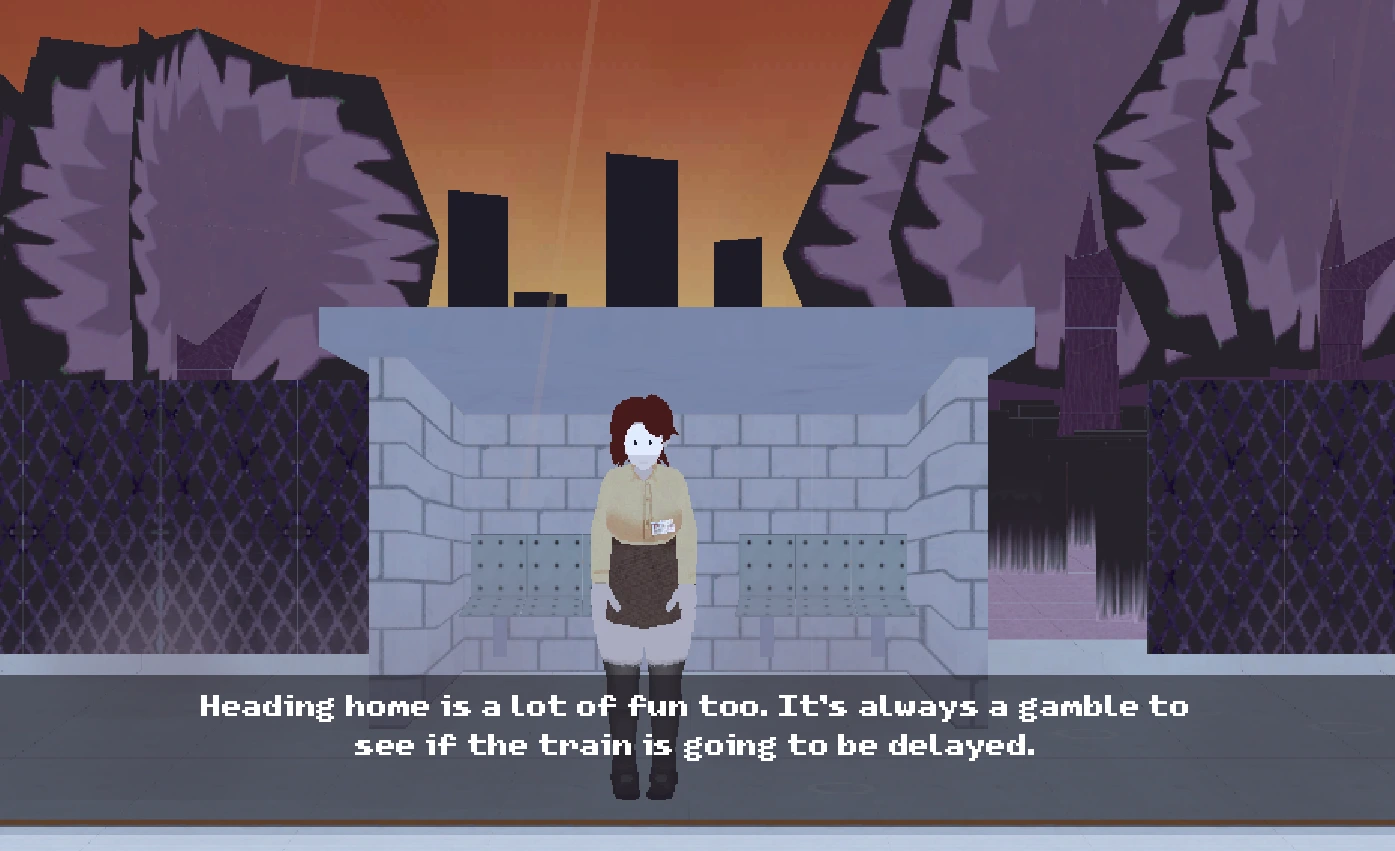
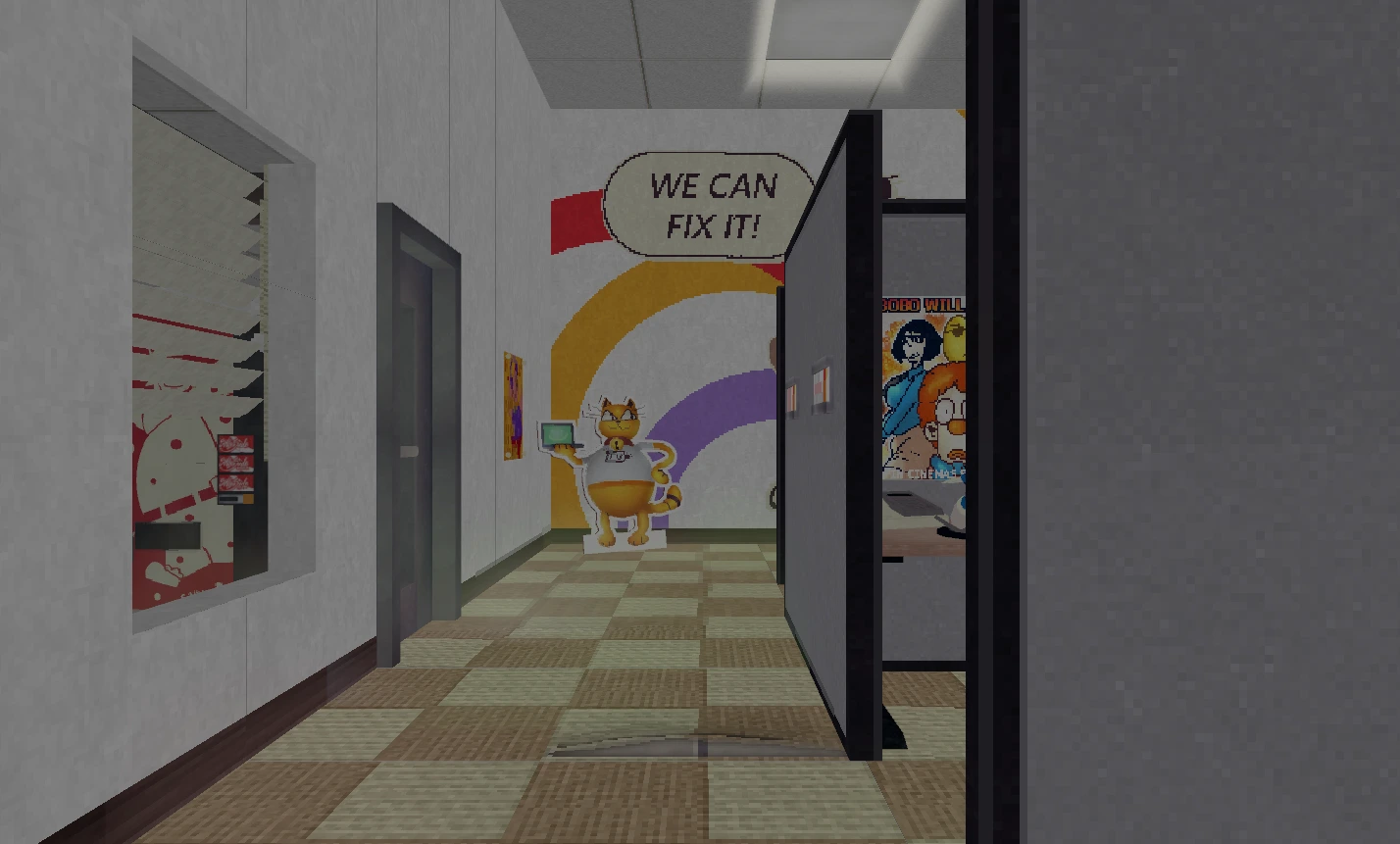
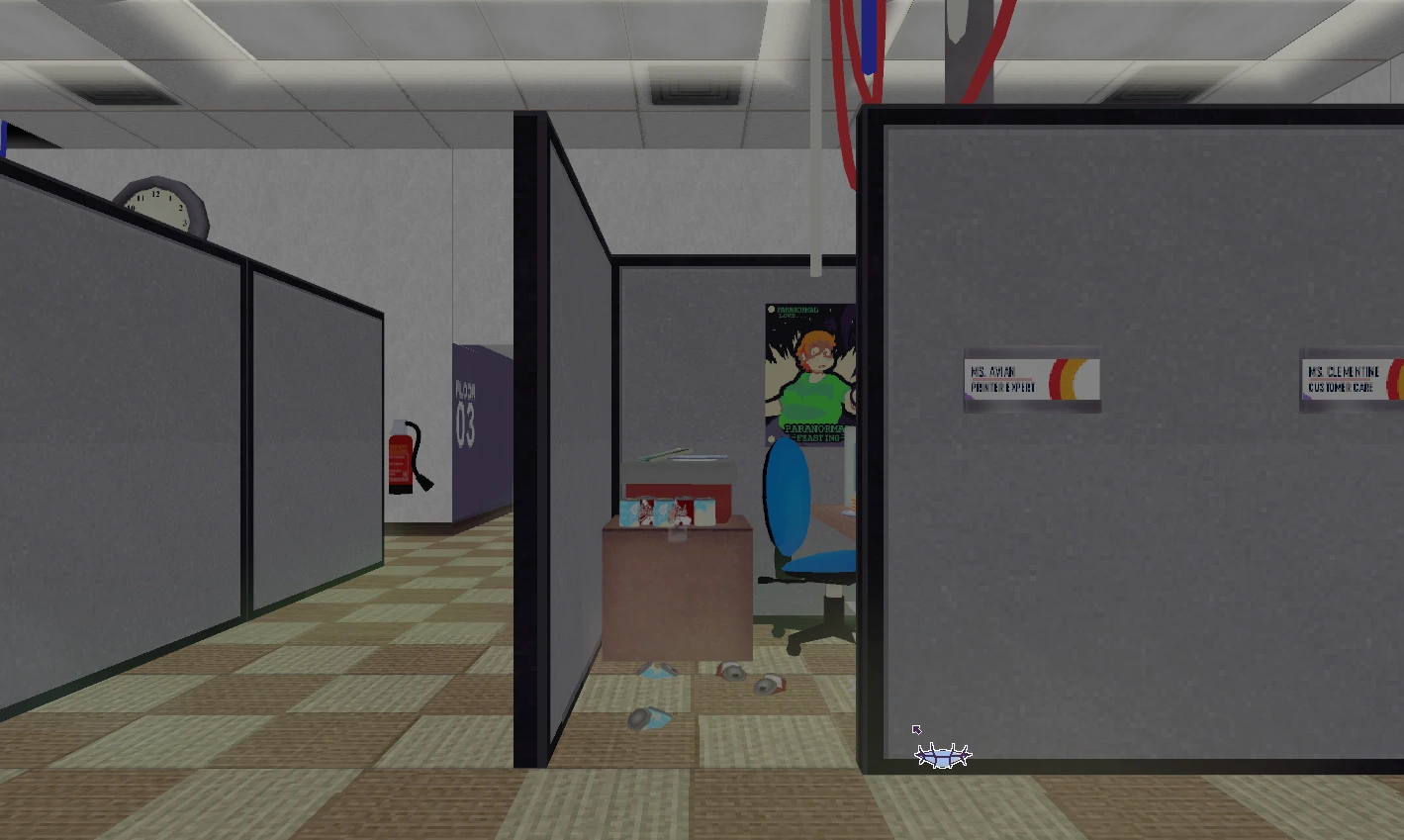
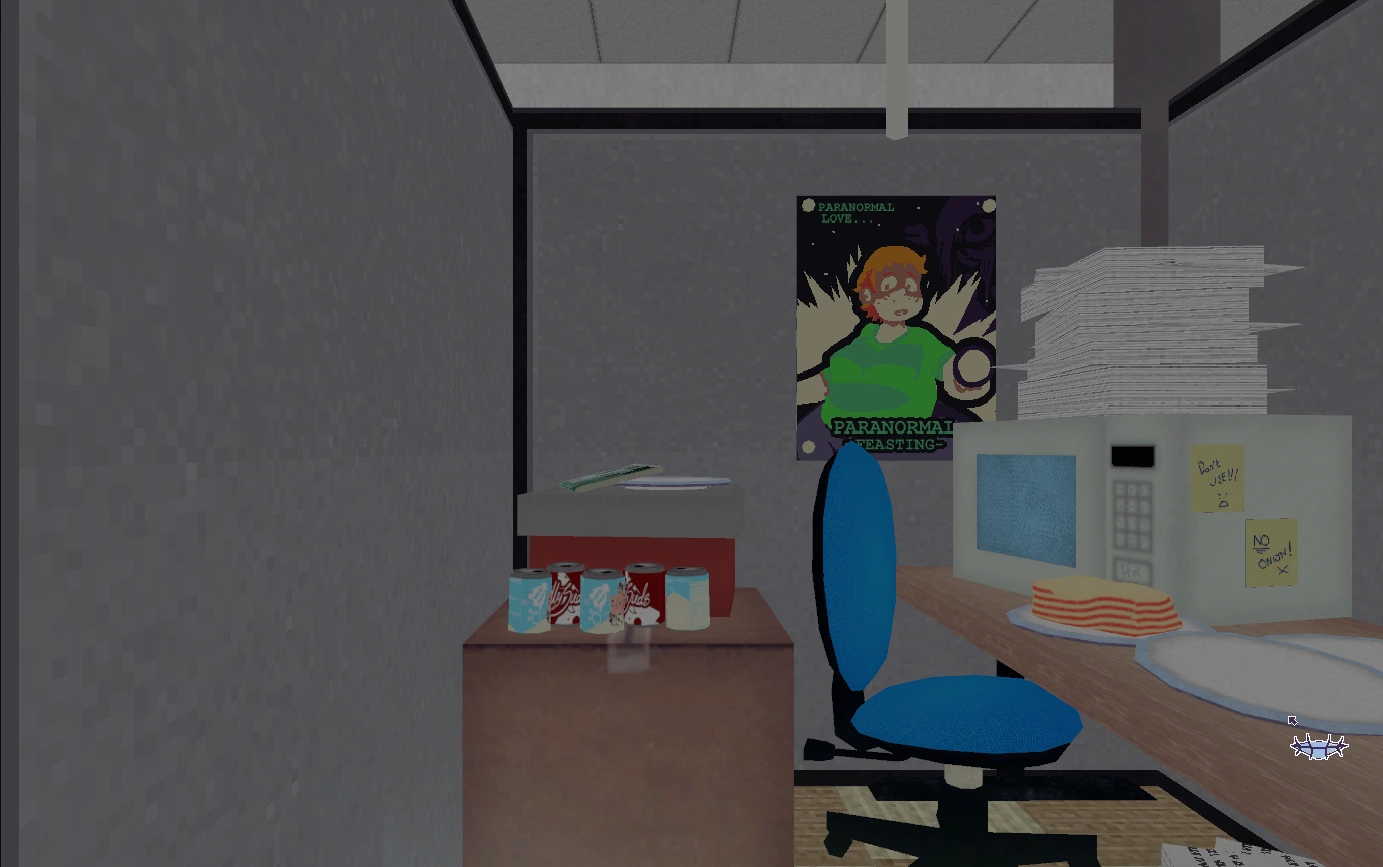
The supplied images support a spoiler-light reading of the game: ordinary tasks establish Ms. Happ's perspective before corridors, cubicles, props, and attraction imagery make the environment harder to classify.
Investigator notes / 03
The strongest approach treats every puzzle as a short argument: observe evidence, form one hypothesis, test it, and revise only the part that failed.
Name the exits, containers, readable surfaces, movable props, characters, and blocked interactions. A broad map prevents one attractive object from consuming all attention.
A symbol may explain where to act rather than being directly usable. Keep the information and the physical inventory in separate mental lists.
If two details appear related, try the safest reversible interaction first. Avoid random clicking that makes success impossible to explain.
When stuck, revisit the earliest unverified assumption, inspect carried objects again, and scan the room from the opposite direction before seeking an answer.
Screening booth / 04
The two videos provide timing and interface context while leaving the playable browser build as the main experience.
Observe how workplace actions, camera movement, dialogue, and object interaction establish the adventure's vocabulary.
See how the visual tone expands and how environmental details become more important as the attraction develops.
Archive essay / 05
The office opening is more than a quiet introduction. It teaches what normal interaction looks like before the game asks the audience to detect change. A coffee task, a desk conversation, or a walk through a corridor establishes scale, control, and expectation. Once those expectations are stable, a strange sound, a repeated symbol, or an object in the wrong place carries weight. Horror and mystery become more persuasive when the player can compare them with a remembered ordinary state rather than being told that every image is dangerous from the beginning.
That design also makes Ms. Happ readable. She is not introduced as a blank puzzle cursor floating between locks. Her routine gives actions a personal rhythm, so entering a colorful attraction feels like a shift in her day rather than a disconnected level transition. The player continues using practical verbs learned at work, but their meaning changes. Opening, reading, carrying, and speaking remain mechanically familiar while the environment grows less willing to explain why those actions are necessary.
In a conventional action game, progress is often measured through distance or defeated obstacles. Here, progress begins with classification. The player must decide which surfaces are readable, which containers might open, which objects can be rotated, and which decorations repeat often enough to become a visual language. A room may be crossed quickly, yet remain unsolved because its important relationships were never noticed. Attention therefore functions like movement through an invisible layer of the map.
A useful first pass should stay broad. Locate doors, desks, cabinets, characters, posters, machines, and unusually isolated props. The second pass can become selective, comparing shapes, colors, numbers, and labels. This order reduces tunnel vision. It also protects the pleasure of discovery because the player is not clicking every pixel mechanically. Each interaction follows a reason, and every result can update a growing model of how the attraction communicates.
Close inspection changes an item from a flat icon into a small space. Its reverse side, underside, removable part, printed text, or relationship between components can matter. Rotating an object is valuable even when it reveals no immediate code because the action teaches the player to ask physical questions. Where would a maker hide a mark? Which edge has been handled? Could one part fit a shape seen elsewhere? The puzzle becomes grounded in the imagined construction of the prop rather than arbitrary interface magic.
Inspection also slows the story at useful moments. A bright room can produce pressure simply through density, but the close-up view narrows that field and lets one object become understandable. The player regains control by studying a limited problem. When the item returns to inventory, it carries more than a name: it carries remembered surfaces and possible relationships. That richer memory supports fairer solutions later because the needed information was visible before the final interaction.
Collected objects should not be treated as automatic keys waiting for matching locks. Each one represents an unresolved relationship between what was found and what has not yet been explained. A tool may change another object, a note may identify a sequence, and a decorative piece may complete a pattern rather than open a door. Asking what information an item contains is often more productive than asking where it can be used immediately.
When progress stalls, revisit inventory descriptions and rotate anything that supports inspection. Then compare each item with blocked interactions recorded during the room scan. This creates a manageable table of possibilities instead of a random series of combinations. If one attempt fails, the player can explain whether the shape, context, sequence, or location was wrong. A failed hypothesis becomes evidence rather than lost time, which is essential in a game where visual abundance can otherwise encourage undirected experimentation.
The fun-house palette promises entertainment, but brightness does not guarantee safety or clarity. Mascot imagery, welcoming signs, and playful props can make a room feel organized around a friendly purpose even when the mechanics suggest another interpretation. The tension comes from the gap between presentation and function. A character can smile while a corridor feels restrictive; a decoration can appear harmless while repeating beside every important control. The player learns to respect the evidence of placement and consequence rather than relying on tone alone.
This does not mean every cheerful object hides a threat. Treating all decoration as hostile would flatten the visual world and produce the same error as trusting everything. The stronger approach compares patterns. Does the image recur near objectives? Does interacting with it change sound, access, or dialogue? Does another room use the same color or shape? Meaning emerges through relationships, allowing humor, charm, unease, and puzzle information to coexist without one interpretation canceling the others.
When stuck, the best hint does not reveal a code or name the final object. It points back to an overlooked category of evidence: inspect the reverse side, compare repeated signs, check the first room, or separate information from physical inventory. A useful hint restores the player's process and lets the final connection remain personal. This is especially important in point-and-click adventures because the satisfaction comes from understanding why two distant details belong together.
Before seeking outside help, take a short reset. Leave the current close-up, scan the room from the opposite direction, reread recent dialogue, and list every blocked interaction in plain language. Then revisit the earliest assumption that has not been tested. Many apparent dead ends come from deciding too quickly that an object is only decoration or that a clue applies to the room where it was found. Changing the frame of the question can be more effective than increasing the number of clicks.
A second route changes the opening because the player now recognizes which ordinary details will matter. A desk no longer appears as undifferentiated clutter; it becomes a set of possible references. A hallway sign can be read for both direction and recurrence. This knowledge speeds progress, but replay remains interesting when attention shifts from answer to construction. Notice when a clue first becomes visible, which interaction confirms it, and how the game prevents the solution from feeling available too early.
Controlled replay is more informative than copying every remembered action at maximum speed. Choose one puzzle chain and test whether its evidence can be recognized earlier without guessing. Preserve the rest of the route. This reveals the difference between genuine foreshadowing and knowledge imported from a previous ending. It also shows how Ms. Happ's journey is paced: ordinary competence accumulates until the player can carry it into spaces designed to overwhelm that competence with color, personality, and noise.
The external build may need time to download its files before the first screen appears. Keep the tab active, click inside the frame once, and avoid repeated refreshes during the initial load. Desktop fullscreen offers the clearest view for small labels and object edges. On mobile, landscape orientation can provide more space, although precise inspection is generally easier with a mouse or trackpad. Sound should remain comfortable because audio cues can support atmosphere without needing to dominate the room.
If the frame remains blank, refresh once, check whether privacy extensions or network filters block the game host, and try a current browser. Local progress may depend on browser storage, so private mode, cleared site data, or a different profile can remove saves. The game contains tense transitions and uncanny mascot imagery, so pauses are part of good play. Observation becomes less reliable when fatigue turns every bright object into noise, and the puzzles reward a calmer return more than forced persistence.
Field procedure / 06
Press the launch control in the player and wait for the remote assets. Click inside the frame to give it keyboard and pointer focus. If movement or inspection does not respond, click the game area again rather than refreshing immediately. Fullscreen is recommended for readable object edges, labels, and room details, while comfortable audio helps preserve attention during longer searches.
If loading fails, refresh once and check extensions, DNS filters, firewalls, or restrictive networks that may block the iframe host. Use a current browser and avoid opening the page in several tabs at once. Progress may be stored locally, so clearing browser data, changing profiles, or using private browsing can remove a save. Keep the same browser profile until the route is complete.
Questions · 07
Useful answers with minimal spoilers and clear browser guidance.
It is a point-and-click puzzle adventure following Ms. Happ from an office routine into a colorful and increasingly uncanny attraction.
Yes. Use the player on this page to load the browser edition without installing a separate desktop application.
Scan the full space, identify exits and interactive surfaces, then inspect distinctive objects before testing a specific puzzle idea.
Rotating and reading an object can reveal marks, removable parts, hidden surfaces, or relationships to clues elsewhere in the environment.
List blocked interactions, revisit inventory, inspect items again, reread recent dialogue, and challenge the earliest assumption that remains untested.
Yes. Collected objects can serve as tools, information, pattern pieces, or parts of a longer clue chain rather than simple keys.
It may load in a current mobile browser, but desktop fullscreen and a mouse or trackpad provide more reliable precision for small clues.
Wait for remote assets, click inside once, refresh once if needed, and check whether an extension or network rule blocks the external game host.
The supplied material is not graphically violent, but it includes uncanny mascot imagery, tense transitions, and mild psychological unease.